
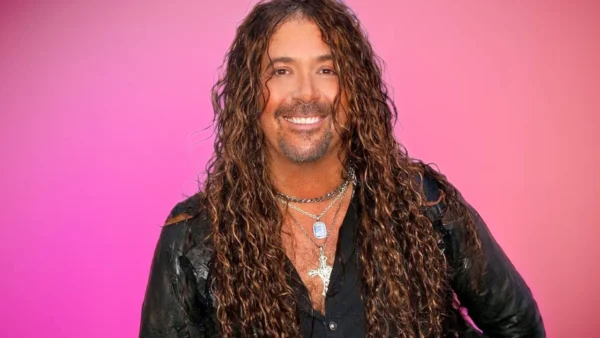

A Symphony in a Soundproof Box: The Jess Harnell Story
It is a truth universally acknowledged that a man in possession of excessively robust vocal cords must eventually find himself locked in a padded room, screaming at a microphone for money. Such is the glamorous, highly improbable, and utterly absurd life of Jess Harnell. To classify him merely as a voice actor is a profound disservice to a man who functions more as a human synthesizer. If one were to consult the authoritative scrolls of the Internet Movie Database , one would find a staggering ledger of animated creatures, belligerent extraterrestrial robots, and anthropomorphic marsupials, all inexplicably sharing the exact same set of lungs. Harnell has conquered Hollywood not by showing his face, but by weaponizing his larynx, aided by an unapologetic love for heavy metal, a relentless work ethic, and a wardrobe purportedly containing over a thousand pairs of spectacularly flamboyant trousers.
The Genesis of Noise: Englewood to Philadelphia
Before he was a bouncing cartoon middle child or a heavily armed alien truck, Jess Harnell was a relatively standard human infant. Born on the 23rd of December, 1963, in Englewood Hospital, New Jersey, he soon relocated to Philadelphia, a city known for brotherly love and a robust appreciation for loud noises. The Harnell household, it must be noted, was not an environment of quiet contemplation. It was a cacophonous laboratory of musical ambition. His father served as a musical director, orchestrating the tunes for The Mike Douglas Show and composing television scores, including the appropriately smash-heavy music for The Incredible Hulk. His mother, meanwhile, was a prominent big band singer. Consequently, young Jess did not simply learn to speak; he learned to project, pitch, and harmonize. Instead of a standard childhood of silent rebellion, he spent his formative years absorbing the rhythmic complexities of a professional studio. The boy possessed a natural mimicry, realizing early on that his vocal apparatus was essentially composed of silly putty. He could replicate the nasal drone of his relatives, the booming cadence of television announcers, and, crucially, the vocal stylings of rock and roll legends. When most children were attempting to master the art of tying their shoes, Harnell was diligently perfecting his four-part harmony of The Beatles and discovering that adopting the persona of David Cassidy from The Partridge Family was a remarkably efficient method for attracting the attention of local females.
The Rock and Roll Diversion and the Accidental Voice Actor
Before the animation industry claimed his soul, Harnell’s primary objective was to become a rock god. He possessed the towering hair, the raw vocal power, and the unyielding confidence required to front a band in the 1980s. He earned his keep as a highly sought-after session singer in Los Angeles, belting out commercial jingles and executing pinpoint vocal impressions of famous rock stars when the original artists were either too expensive or too incapacitated to attend the recording sessions. His rock and roll dreams nearly reached the stratosphere when, following Steve Perry’s departure from the band Journey, Harnell received a phone call from keyboardist Jonathan Cain. Assuming it was a remarkably well-researched prank, Harnell promptly hung up. Upon realizing his catastrophic breach of telephone etiquette, he quickly made amends, flew out to sing in Cain’s studio, and momentarily brushed shoulders with rock royalty. While Journey ultimately morphed into Bad English, Harnell continued to flex his vocal muscles in the studio, unknowingly preparing himself for a much stranger career path. The transition from leather-clad rock frontman to animated voiceover artist occurred precisely when the universe realized that standing in a vocal booth required exactly the same skills as fronting a band: breath control, an absolute lack of inhibition, and the ability to produce noises that shatter glass. In 1991, Harnell landed his first major gigs. He did not play a brooding leading man; rather, he voiced Br’er Rabbit for the Splash Mountain attraction at Disneyland, establishing a precedent for entertaining millions of people while remaining completely invisible. Around the same time, he voiced an alien bent on world domination in the animated series Darkwing Duck. The floodgates had officially opened.
Enter the Warner: The Ballad of Wakko
In 1993, the cosmos presented Harnell with a script for a new Steven Spielberg-produced cartoon titled Animaniacs. The show was an exercise in pure, unadulterated chaos, and the producers were seeking voices for the Warner Brothers (and the Warner Sister). Harnell was handed a character description for the middle child, Wakko Warner. The character brief was simple: he wore a red baseball cap, he had a bottomless appetite, and he vehemently refused to wear trousers. Naturally, Harnell felt an immediate, spiritual kinship. The audition process for Wakko was an exercise in surrealism. The producers initially suggested that Wakko should sound like John Lennon. Harnell, having spent his youth perfecting his Fab Four impressions, readily obliged. However, upon viewing a sketch of the diminutive, hyperactive creature, Harnell realized that the smooth, cynical drawl of Lennon was an anatomical mismatch. With the stroke of improvisational genius that would define his career, Harnell shrank the voice, pitched it upwards, and injected it with the frantic energy of a man trapped in a helium balloon factory. It was, essentially, a Liverpudlian rock star on a sugar rush. Yet, the producers were not entirely convinced and requested alternative takes, inexplicably asking Harnell to perform the character as Elvis Presley. Harnell dutifully rattled off a few signature lines in the style of the King, all while harboring the distinct suspicion that an Elvis-impersonating cartoon dog-creature made absolutely no sense whatsoever. Fortunately, sanity prevailed, the helium-Lennon voice was selected, and Wakko Warner became a cultural icon, propelling Harnell into the upper echelons of voice acting royalty.
A Kaleidoscope of Characters: From Superheroes to Psychopaths
Once one successfully voices a pantsless cartoon icon, the entertainment industry tends to assume one can voice absolutely anything. Harnell’s resume rapidly expanded into a bewildering tapestry of contrasting personalities.
Captain Hero: Delusions of Grandeur
In the realm of adult animation, Harnell found a beautifully twisted outlet in the Comedy Central series Drawn Together. Here, he breathed life, and profound neuroses, into Captain Hero, a devastatingly handsome, heavily muscled parody of Superman who was, tragically, a sociopathic narcissist with the emotional maturity of a toddler. Harnell’s performance was a masterclass in comedic juxtaposition, delivering lines of staggering depravity with the booming, earnest baritone of a classic 1950s radio announcer.
Ironhide: Heavy Metal on the Big Screen
Proving that he was not solely confined to two-dimensional lunacy, Harnell lent his formidable vocal grit to the multi-billion-dollar live-action Transformers films. As Ironhide, the grizzled, heavily armed weapons specialist of the Autobots, Harnell traded his helium-pitched antics for a voice that sounded like gravel being crushed inside a cement mixer. It was a role that required vocal chords of steel, proving that Harnell could seamlessly transition from making children giggle to making cinematic explosions sound vaguely conversational.
Crash Bandicoot and the Art of the Grunt
In the realm of video games, Harnell achieved immortality by providing the vocalizations for Crash Bandicoot. This particular role required a unique linguistic approach, primarily because Crash does not speak so much as he yelps, grunts, and unleashes the occasional enthusiastic noise. It takes a special kind of theatrical training to convey surprise, agony, and triumph entirely through the medium of marsupial gibberish, but Harnell executed it with the precision of a classical Shakespearean actor.
Chilly the Snowman and Friendly Phantoms
Lest one think Harnell is entirely consumed by explosions and adult humor, he has remained a steadfast presence in children’s programming. In the Disney Junior juggernaut Doc McStuffins, he voices Chilly, an adorably neurotic stuffed snowman who lives in constant, existential dread of melting, despite residing entirely indoors. He also brought his vocal magic to the magical realm of Sofia the First as the bumbling Cedric the Sorcerer, and voiced the perpetually hungry ghost Fatso in the animated spin-off of Casper, proving his unparalleled ability to portray entities defined entirely by their lack of corporeal form and their obsession with snacks.
Scary Terry: The Nightmare with a Heart of Gold
No exploration of Harnell’s absurdly diverse career would be complete without acknowledging his unforgettable turn in the sci-fi comedy phenomenon Rick and Morty. As Scary Terry, a legally-distinct parody of a famous dream-invading horror villain, Harnell delivered a performance dripping with misplaced aggression and an overreliance on a very specific term of endearment. Yet, beneath the terrifying exterior, Harnell imbued the character with a touching vulnerability, portraying a monster who was deeply insecure about his terrifying abilities and simply wanted to provide for his family.
Rock Sugar: When Pop Met Heavy Metal
Despite his overwhelming success in a soundproof booth, Harnell never entirely abandoned his desire to stand on a stage and command a crowd. In a maneuver of sheer, unadulterated musical madness, he formed the band Rock Sugar. The concept behind the band was as brilliant as it was insane: what if a 1980s hair metal band became stranded on a desert island with nothing but a crate of teenage pop records? The result is a glorious, high-octane mashup of disparate genres. Rock Sugar takes the aggressive, face-melting riffs of heavy metal bands and seamlessly weaves them into the sugary, melodic vocal lines of pop divas. As the lead singer, Harnell finally gets to utilize his entire vocal arsenal in a single setting. He transitions from a guttural rock scream to a pitch-perfect pop falsetto without missing a beat, all while dressed in the sort of rhinestone-studded attire that would make a Las Vegas magician blush. The band has played major festivals, shared the stage with legendary rock acts, and serves as a loud, unapologetic reminder that Harnell is, at his core, a rock star who just happens to be spectacularly good at cartoon voices.
The Philosophy of a Vocal Chameleon
Surviving for decades in an industry notorious for its brutal turnover requires more than just talent; it requires a specific philosophical outlook. For Harnell, the voice is a muscle. If one does not stretch it, test it, and occasionally subject it to the vocal equivalent of an ultramarathon, it will atrophy. He treats his craft with the discipline of an elite athlete, constantly finding the specific placement of a character’s voice—whether it sits in the nasal cavity, the back of the throat, or deep within the diaphragm. Moreover, his definition of success has evolved significantly since his early days of chasing record deals. While he once measured his worth by the sheer volume of gigs he booked, he now views his career through a lens of profound gratitude. He recognizes the absolute absurdity of his profession, a grown man getting paid handsomely to pretend to be a neurotic snowman or a pantsless cartoon dog. His primary objective is no longer fame, but the simple, noble pursuit of making people smile. In a world that frequently insists on being dreadful, Harnell views his ability to provide thirty minutes of animated escapism as a vital public service. So, let us raise a glass to the unseen maestro, the sultan of sound, the undisputed champion of the vocal booth. He is a man who recognized that reality is entirely overrated and opted instead to build a career out of thin air, sheer volume, and a whole lot of weird noises. When the history books of entertainment are finally written, they may focus on the directors and the leading men, but the true soundtrack of our collective imagination will forever be provided by a man wearing an aggressively sparkly jacket, clearing his throat, and confidently stepping up to the microphone to do exactly what he wants.
Learn how D.C. Douglas Annoyed Jess Harnell:Voice Actors D.C. Douglas Knows and Loves!


OR CHECK OUT THE LATEST BLOG DROPPING:D.C. Douglas Joins Disney+’s Vampirina Season 2 as Speaker of Books
Film & Television work. 🎙️HEAR MY VOICE:
Voice Over work. 🎪CONVENTIONS:
Book me for your con! 🩶THE DC STORE:
Learn about Cameos!
I'm such a whore. 🎪LIVE IN PERSON:
Public nuisance posts. 🗣️INTERVIEWS:
Posts from my butt. 🍷GREEN ROOM:
BTS & L.A. life. 🧪RESIDENT EVIL WORLD:
Wesker fetish? 💫TALENT SPOTLIGHT:
Stalker crib notes.