

WANT MORE? SEE D.C.'S VIDEO PLAYLISTS:D.C.'S CAREER IN CAROUSEL


OR CHECK OUT THE LATEST BLOG DROPPING:What Did D.C. Douglas Do? First Look Trailer Arrives…
Tums: A Century of Chewable Chemistry
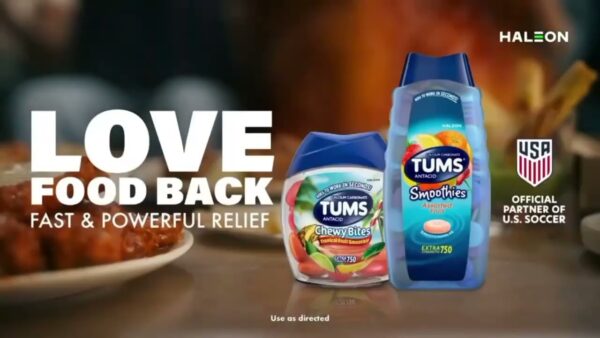
In 1928, a St. Louis pharmacist named James Harvey Howe went down to his basement to fix his wife’s indigestion. He mixed sugar with calcium carbonate. It worked. Commercial production began two years later. That is the entire origin story of Tums, a tablet that has outlasted the pharmacy that invented it and several corporate owners who assumed they were buying something more complicated than chalk and sugar. (The chalk, it turns out, was the whole idea.)
From Basement to Boardroom
Commercial production began in 1930 under the Lewis-Howe Company, named for Howe and his uncle A. H. Lewis of Bolivar, Missouri. The name came from a 1930 radio contest, won by a nurse who submitted “Tums for the Tummy.” Revlon bought the company in 1978. Beecham Group took it in 1986. Beecham later became part of GlaxoSmithKline. In July 2022, GSK spun off its consumer healthcare business as Haleon, listed in London and New York, and Tums went along for the ride. Through all of it, the tablets kept coming out of the same St. Louis plant Howe built in 1930.
What It Is (Chalk) and Why It Works (Also Chalk)
Tums is calcium carbonate, the same compound in limestone and seashells, pressed into a chewable tablet with sugar and flavoring. It neutralizes stomach acid on contact, which makes it fast, and gloriously simple next to the prescription drugs that later crowded the same shelf. Flavors run to peppermint, berry, orange, and cherry, and a sugar-free version exists for people who want their antacid without the spoonful of sugar that built the brand.
The Empire That Heartburn Built
Tums defined the chewable antacid category before the category had a name, and nearly a century later it remains one of the best-known antacid brands in North America. Competitors came and went with bigger budgets and fancier chemistry. The chalk tablet endures, which is either a tribute to Howe’s formula or proof that stomach acid has no respect for innovation.
Credits
- Created by James Harvey Howe, pharmacist, St. Louis, Missouri (1928)
- Commercial production: Lewis-Howe Company (1930)
- Current owner: Haleon (since July 2022)
- Previous owners: Revlon (Norcliff Thayer), Beecham Group, SmithKline Beecham, GlaxoSmithKline
- Manufacturing: St. Louis, Missouri
In St. Louis, a factory that started in a pharmacist’s basement still presses the same tablets, while the brand changed hands four times. The stomachs, presumably, never noticed.
Film & Television work. 🎙️HEAR MY VOICE:
Voice Over work. 🎪CONVENTIONS:
Book me for your con! 🩶THE DC STORE:
Learn about Cameos!
I'm such a whore. 🎪LIVE IN PERSON:
Public nuisance posts. 🗣️INTERVIEWS:
Posts from my butt. 🍷GREEN ROOM:
BTS & L.A. life. 🧪RESIDENT EVIL WORLD:
Wesker fetish? 💫TALENT SPOTLIGHT:
Stalker crib notes.