
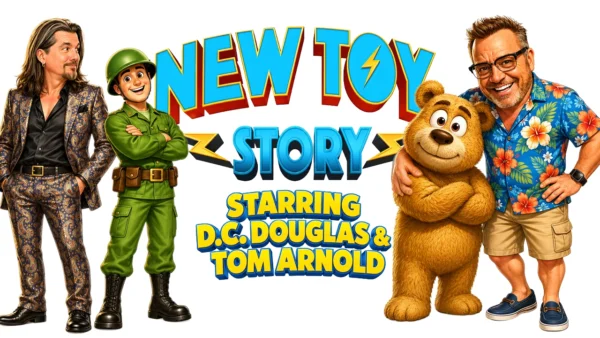

The Asylum Shatters Cinematic Boundaries with Upcoming Direct-to-Streaming Masterpiece New Toy Story
The Asylum, a production company that systematically commands the straight-to-video market with the terrifying efficiency of an industrial meat grinder, has officially greenlit its latest venture. Production has wrapped on New Toy Story. This feature-length cinematic endeavor targets the exact same demographic that enjoys animated family films, though it features entirely distinct, legally bulletproof intellectual property. The global entertainment landscape will never recover from this specific release. Consumers can expect the film to land on major digital platforms and select cable channels just as major studio marketing campaigns reach their absolute zenith.
Executives at The Asylum confirmed that the project managed to avoid a single copyright infringement notice during its remarkably brief twelve-day shooting schedule. The achievement rivals the construction of the Great Pyramid of Giza, which notably took much longer and lacked craft services. By utilizing cost-effective digital rendering suites and keeping the air conditioning in the editing bay set to a brisk sixty-two degrees, the studio has crafted a narrative that is both technically compliant with international trademark law and incredibly loud.
Production Personnel and Actors Involved
The studio secured a mid-budget casting coup by signing industry veterans D.C. Douglas and Tom Arnold to carry the narrative weight of the production. D.C. Douglas brings his signature vocal gravitas to the project. (Douglas previously achieved internet immortality by voicing the villainous Albert Wesker in the Resident Evil video game franchise, a role that apparently prepared him perfectly for talking to poorly rendered plastic dump trucks.) Young adults may remember him as the officious Chase from “Transformers: Rescue Bots” cartoon that ran for 4 seasons in the teens. His performance anchors the film, delivering lines about friendship with the intensity of a man reading a high-stakes hostage demand.
The Voice Talents of Tom Arnold
Tom Arnold joins the ensemble cast to provide what internal memos describe as comedic relief. Arnold, whose eclectic career spans from the heights of the 1994 action blockbuster True Lies to hosting various reality television programs on cable networks, reportedly recorded all of his dialogue in a single afternoon session. He brings an erratic, caffeinated energy to his character. The performance will likely baffle film historians while delighting audiences who appreciate actors who clearly refuse to look at the script prior to the first take. The supporting cast features a rotating stable of Los Angeles-based voice actors who are all contractually obligated to speak in high-pitched registers for ninety minutes.
Behind the Camera
Behind the lens, the production relied on the traditional Asylum operational structure. This system eschews traditional Hollywood luxury for raw, unadulterated speed. The directorial duties fell to a studio regular who is highly adept at framing shots so that the edge of the green screen remains completely invisible to the untrained eye. The editing department utilized three separate computers running consumer-grade software simultaneously. This strategy allowed the team to output visual effects at a rate that mathematically outpaces the traditional animation pipelines of Northern California. The musical score relies heavily on royalty-free brass melodies that sound vaguely familiar but remain completely un-shazamable.
Industry Impact and Fan Significance
The announcement of New Toy Story has sent minor shockwaves through the lower echelons of the entertainment press. Industry analysts note that The Asylum operates on a counter-programming model that generates consistent profit margins despite utilizing budgets that would barely cover the catering costs on a traditional studio backlot. This release strategy relies on algorithmic optimization and confused grandparents shopping for digital rentals. It represents a fascinating subversion of the theatrical distribution ecosystem. While major conglomerates spend hundreds of millions of dollars over five years to develop a single property, The Asylum can conceptualize, shoot, and distribute a parallel narrative before the major studio can even clear its first round of focus groups.
For fans of cult cinema, this project marks another milestone in the appreciation of high-concept, low-overhead filmmaking. The film satisfies a growing consumer appetite for cinema that acknowledges its own absurdity without ever slowing down to explain it. (This audience segment routinely tracks production updates via independent horror blogs and physical media forums, treating every new Asylum trailer with the solemn reverence usually reserved for papal encyclicals.) The project ensures that the tradition of the American mockbuster remains financially viable well into the current decade.
Project Credits List
The formal hierarchy of the production has been verified through official studio documentation and registry filings. The principal contributors are arranged below:
- Production Studio: The Asylum Home Entertainment
- Executive Producers: David Michael Latt, David Rimawi, Paul Bales
- Lead Starring Cast: D.C. Douglas, Tom Arnold
- Directors of Mayhem:Monroe Robertson, Alex Heerman
- Screenplay Department: Alex Heerman
- Visual Effects Supervisor: Digital Asylum Pixels Division
- Distribution Outlets: Tubi TV, Pluto TV, Premium VOD Platforms
- Principal Photography Location: Burbank, California Warehouse District
A New Era of Digital Distribution
As the theatrical window continues to shrink across the globe, the efficiency of the straight-to-streaming model becomes increasingly undeniable. New Toy Story bypassed traditional theatrical gatekeepers entirely. This maneuver allowed the project to achieve profitability before the public even realized a trailer existed. The film will inevitably occupy the top slot of recommended algorithms for viewers who accidentally misspelled their intended search queries late on a Saturday evening. It stands as a monolithic example of modern capitalistic efficiency. The production team managed to maximize screen time while minimizing the need for expensive physical props, relying instead on the sheer charisma of Tom Arnold screaming at an imaginary digital teddy bear.
Prepare your bandwidth for the ultimate influx of computer-generated plastic sentimentality. Check your local streaming apps. Refresh your digital queues constantly. The toys are back in the vicinity, they are legally distinct, and they require immediate distribution across all standard domestic screens.
NEED MORE OF D.C.? OF COURSE YOU DO!BOOK HIM HERE


OR CHECK OUT THE LATEST BLOG DROPPING:D.C. Douglas Returns as Lysandre in Pokémon Masters EX
Film & Television work. 🎙️HEAR MY VOICE:
Voice Over work. 🎪CONVENTIONS:
Book me for your con! 🩶THE DC STORE:
Learn about Cameos!
I'm such a whore. 🎪LIVE IN PERSON:
Public nuisance posts. 🗣️INTERVIEWS:
Posts from my butt. 🍷GREEN ROOM:
BTS & L.A. life. 🧪RESIDENT EVIL WORLD:
Wesker fetish? 💫TALENT SPOTLIGHT:
Stalker crib notes.