
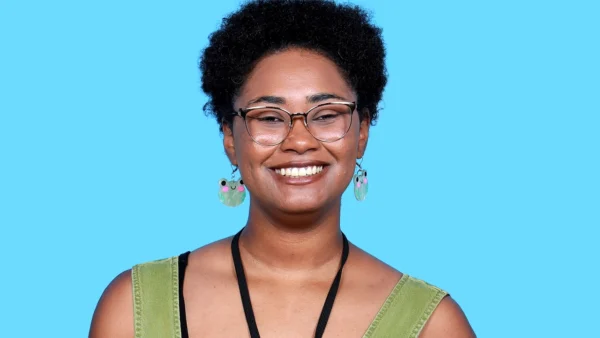

Early Life and the Suspicious Decision to Pursue Voice Acting
Anairis Quiñones was born on September 16, 1997, in Florida, which is a perfectly normal place to begin a career that would eventually involve portraying superpowered rabbits, mysterious witches, and various individuals capable of leveling cities with their feelings. Their professional activities are broadly categorized under the dignified title of “voice actress,” although the work itself frequently involves screaming while imaginary monsters explode nearby. This is considered standard practice.
As a child, Quiñones reportedly developed an interest in anime and animated media, which is the sort of hobby that quietly mutates into a profession when left unattended. By 2009, still quite young, they had begun pursuing voice acting with the seriousness of a graduate student who has discovered that their thesis topic is actually a talking sword. The industry, perhaps unwisely but ultimately correctly, allowed this trajectory to continue. Over time, the voice that once watched dubbed anime would become one of the voices inside it.
Arrival in the Anime Dub Ecosystem
The English dubbing world of Japanese animation operates with the calm administrative efficiency of a government office that just happens to employ dragons, assassins, magical girls, and at least one sentient slime. Within this ecosystem, Quiñones steadily accumulated roles across numerous productions, each one adding another entry to the steadily expanding ledger of characters requiring English dialogue.
Among the most prominent of these performances is Rumi Usagiyama, better known as Mirko, the rabbit themed professional hero in My Hero Academia. Mirko is famous for possessing a personality that might best be described as “relentless enthusiasm applied to physical combat.” Quiñones’ portrayal captured the character’s ferocity, athletic confidence, and willingness to solve most problems by kicking them extremely hard. The performance has been widely recognized by fans of the series, who appear to enjoy heroes that resemble high speed demolition equipment with excellent cardio.
Another notable role arrived with Echidna, the enigmatic Witch of Greed in Re:Zero − Starting Life in Another World. This character spends much of her time calmly discussing metaphysical horrors over tea, which is an excellent reminder that voice acting occasionally involves delivering polite conversation while the narrative collapses into existential despair. Quiñones handled the role with a mixture of warmth and unsettling intelligence, producing a performance that earned recognition within the anime community.
For those seeking further verification that the voice acting profession involves a surprising number of witches, monsters, and emotionally complicated teenagers, a detailed list of Quiñones’ credits can be found on Anairis Quiñones’ IMDb page.
Characters, Franchises, and the General Management of Fictional People
Anime Roles
Quiñones’ voice has appeared in numerous anime productions, many of which involve plots that escalate from high school drama to cosmic warfare in roughly three episodes. In The Irregular at Magic High School, they voice Miyuki Shiba, a character whose calm elegance hides formidable magical power. In Wonder Egg Priority, they portray Rika Kawai, a sharply written character navigating trauma, guilt, and adolescence while occasionally battling surreal dream creatures. This is, apparently, how therapy works in animated storytelling.
Other anime credits include roles in D4DJ First Mix as Rei Togetsu and appearances in series such as Log Horizon, To Your Eternity, and Our Last Crusade or the Rise of a New World. Each role adds another data point to the quietly impressive statistical pattern that voice actors are frequently asked to portray people in emotionally catastrophic circumstances while sounding perfectly composed.
Animation and Western Projects
Outside the realm of Japanese animation, Quiñones has also contributed to Western animated projects. In the Netflix series RWBY, they voice Harriet Bree, a character who belongs to a team of highly trained fighters tasked with protecting humanity from supernatural threats. This arrangement is generally stressful for everyone involved.
Quiñones has also appeared in the fashion doll animated franchise Rainbow High, voicing characters including Skyler Bradshaw and Poppy Rowan. This particular environment contains fewer monsters and slightly more discussions about design portfolios, which must feel like a vacation.
Additional animation credits include roles in Princess Power, Dora, and other productions that quietly expand the list of fictional individuals whose vocal cords are technically borrowed from a single human being.
Video Games and the Highly Competitive Field of Digital Combat
Voice acting for video games is a specialized form of performance in which actors must deliver dialogue for characters who will be repeatedly knocked unconscious by players experimenting with the jump button. Quiñones has contributed to several major gaming titles.
In Street Fighter 6, they voice Kimberly, a fast moving ninja styled fighter introduced as one of the game’s new combatants. The character is energetic, stylish, and capable of defeating opponents using a mixture of athletic combat and cassette tapes. This is considered perfectly reasonable within the Street Fighter universe.
Quiñones has also voiced characters in globally popular titles such as Genshin Impact and Honkai: Star Rail, where sprawling narratives and enormous player bases ensure that a single line of dialogue may be heard by millions of people who are currently climbing mountains in search of glowing artifacts.
Recognition and Industry Presence
The work has not gone unnoticed. Quiñones received nominations at the Crunchyroll Anime Awards for English voice acting performances connected to roles such as Echidna in Re:Zero − Starting Life in Another World and Rika Kawai in Wonder Egg Priority. Awards in the anime dubbing community function as a polite acknowledgment that someone managed to convey emotional devastation while synchronizing their dialogue to a character animated twelve time zones away.
Beyond recording studios, Quiñones frequently appears at fan conventions where audiences gather to celebrate animation, games, and the people who bring those characters to life. These events typically involve panels, signings, enthusiastic fans, and the occasional realization that a person’s childhood hero is standing ten feet away discussing microphones.
The Ongoing Project of Being Everywhere at Once
A survey of Anairis Quiñones’ career reveals a steadily expanding constellation of characters across anime, animation, and video games. Heroes, witches, students, fighters, mysterious rulers, and assorted individuals with elaborate hair colors all pass through the same vocal instrument. The effect is a bit like discovering that one librarian is responsible for stocking half the books in a city.
Which leaves us with a peculiar but pleasant reality. Somewhere in a recording studio, often surrounded by scripts describing world ending disasters or emotionally fragile teenagers, Anairis Quiñones continues the quietly remarkable process of giving fictional people their voices. Entire universes shout, laugh, argue, and save the day using borrowed lungs. The paperwork for this arrangement appears to be in order.
Now Read The VO Dirt!Voice Actors D.C. Douglas Knows and Loves!


OR CHECK OUT THE LATEST BLOG DROPPING:D.C. Douglas Joins Disney+’s Vampirina Season 2 as Speaker of Books
Film & Television work. 🎙️HEAR MY VOICE:
Voice Over work. 🎪CONVENTIONS:
Book me for your con! 🩶THE DC STORE:
Learn about Cameos!
I'm such a whore. 🎪LIVE IN PERSON:
Public nuisance posts. 🗣️INTERVIEWS:
Posts from my butt. 🍷GREEN ROOM:
BTS & L.A. life. 🧪RESIDENT EVIL WORLD:
Wesker fetish? 💫TALENT SPOTLIGHT:
Stalker crib notes.