
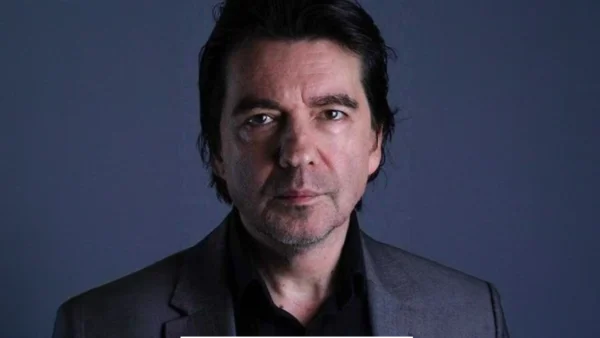

James Clyde
An Actor Who Appears Calmly in the Middle of Grand Narratives
James Clyde is a British actor whose career has unfolded across film, television, and video games, which means he has spent several decades portraying individuals who exist in circumstances that would cause most sensible people to move to a quiet village and refuse all further involvement with dramatic storytelling. Instead, Clyde has approached these roles with the professional composure of someone who has accepted that fictional catastrophes are simply part of the workday.
Born in England, Clyde built his acting career through a mixture of classical training, television work, and appearances in major studio films. The early years of an actor’s life tend to involve auditions, rehearsals, travel, and the occasional philosophical question about why one has chosen a profession where pretending to be someone else counts as a skill. Clyde persisted through these customary rites of passage and gradually established himself as a dependable character actor capable of moving between historical drama, fantasy, and modern action narratives.
His career contains a particularly useful quality for storytellers. He often plays characters who appear thoughtful, serious, or faintly mysterious, which allows writers to place him in scenes where the plot requires someone to know slightly more than everyone else in the room. This skill has proven adaptable across genres, including epic historical dramas, mythological adventures, and modern video game performances where entire worlds depend on a few well-delivered lines.
Early Screen Appearances
Where Historical Drama Becomes a Workplace
Clyde’s early film and television work includes appearances in productions that demonstrate the British entertainment industry’s longstanding affection for historical settings. One of his notable early roles came in Gladiator (2000), the Ridley Scott epic starring Russell Crowe and Joaquin Phoenix. The film depicts the Roman Empire in a state of political chaos, which means that anyone appearing on screen must wear armor, deliver serious dialogue, and attempt to look comfortable standing near a man who is about to fight a tiger.
The production became a landmark historical drama and a major Academy Award winner, and Clyde’s presence in the film placed him within a project that would become one of the defining epics of its era. Appearing in such a production tends to look impressive on a résumé, although on the day itself it mostly involves arriving on set, performing scenes with professional focus, and discovering that ancient Rome is slightly warmer than expected under studio lighting.
Following that film appearance, Clyde continued building a steady screen career that included television roles and film performances. Like many working actors, he moved fluidly between projects that ranged from large studio productions to smaller narrative roles that nonetheless demanded careful attention to character and tone.
Television and Character Roles
Where Many Stories Require Someone Sensible in the Room
Television has provided Clyde with a wide variety of opportunities to portray authority figures, scholars, officials, and other characters who appear as though they might understand the situation even when the situation itself is completely unreasonable.
His television work includes appearances in notable series such as The Bill, a long-running British police procedural that produced hundreds of episodes and thousands of scenes in which detectives attempted to solve crimes while remaining remarkably calm about paperwork. He also appeared in London’s Burning, a drama centered on firefighters, which required actors to convincingly portray individuals who run toward flames while everyone else runs away.
These television performances helped establish Clyde as a versatile performer comfortable in both contemporary and period settings. The roles themselves varied, but they shared one underlying requirement. The character must appear believable in the middle of chaos. This skill has proven remarkably transferable.
Entering the World of Video Games
Where Acting Happens Inside Motion Capture Suits
In recent years Clyde expanded into video game performance, a field where actors deliver dramatic scenes while surrounded by motion capture equipment and computer technicians who appear to be measuring the emotional weight of a scene with laser precision.
One of his most prominent recent roles is the character Spencer in Resident Evil: Requiem, a major installment in Capcom’s long-running survival horror franchise. The Resident Evil series has spent decades exploring fictional viral outbreaks, corporate conspiracies, and creatures that strongly discourage casual exploration of abandoned laboratories.
Within that environment Clyde portrays Spencer, a character connected to the larger narrative architecture of the franchise. The role places him within a production that blends voice acting, motion capture performance, and cinematic storytelling techniques that increasingly resemble film production.
Video game acting requires a slightly different skill set from traditional film or television. Actors must imagine environments and creatures that will only appear later when digital artists complete the visual design. One might be delivering intense dramatic dialogue while standing in a quiet studio wearing a suit covered in reflective markers. The monsters arrive later.
Additional information about Clyde’s screen and voice acting credits can be found on his professional listing at James Clyde’s IMDb profile, where his filmography demonstrates the gradual accumulation of roles across multiple decades of production.
A Career Built on Quiet Reliability
Which Is the Secret Engine of Many Productions
Actors like James Clyde often build careers that operate slightly outside the spotlight but remain essential to the functioning of large productions. Major films, television series, and video games require performers who can step into complex narratives and deliver grounded performances without drawing unnecessary attention to the mechanics of acting itself.
In practical terms, this means portraying scholars, officials, commanders, investigators, or mysterious figures who appear to know exactly what is happening even when the plot has become extremely complicated. These roles might not always occupy the center of the story, but they anchor the world around them.
Clyde’s career demonstrates this professional reliability. Across historical epics, television drama, and modern interactive storytelling, he has consistently appeared as a performer capable of supporting large narrative structures while maintaining a sense of quiet authority.
Some actors chase the spotlight with theatrical enthusiasm. Others simply arrive, perform the role, and allow the story to unfold around them.
James Clyde appears to belong to the second category, which is a slightly less dramatic approach to fame but an extremely effective way to remain employed in an industry that is often unpredictable, occasionally chaotic, and always delighted to place actors inside stories involving ancient empires, burning buildings, or laboratories where someone has clearly ignored the warning labels.
And somewhere inside a motion capture stage, or a film set, or a television studio corridor where a director is calmly explaining that the fictional crisis will begin in approximately five minutes, James Clyde will likely continue doing what he has done for years. He will step into the role, deliver the performance, and behave as though the entire situation is perfectly normal.
Now Read The VO Dirt!Voice Actors D.C. Douglas Knows and Loves!


OR CHECK OUT THE LATEST BLOG DROPPING:D.C. Douglas Joins Disney+’s Vampirina Season 2 as Speaker of Books
Film & Television work. 🎙️HEAR MY VOICE:
Voice Over work. 🎪CONVENTIONS:
Book me for your con! 🩶THE DC STORE:
Learn about Cameos!
I'm such a whore. 🎪LIVE IN PERSON:
Public nuisance posts. 🗣️INTERVIEWS:
Posts from my butt. 🍷GREEN ROOM:
BTS & L.A. life. 🧪RESIDENT EVIL WORLD:
Wesker fetish? 💫TALENT SPOTLIGHT:
Stalker crib notes.