
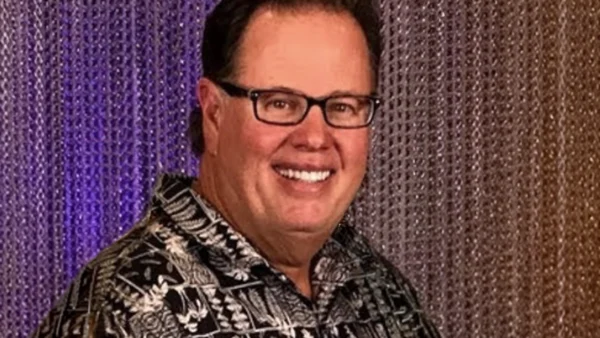

The Vocal Domination of Scott Rummell
Scott Rummell possesses a voice that suggests he was born in a recording booth while simultaneously commanding a fleet of warships. He did not merely enter the voice-over industry; he colonized it with the relentless efficiency of a migratory bird that refuses to stop for snacks. Since the late 1980s, Rummell has maintained a career that makes the concept of “time off” look like a quaint, Victorian hallucination. His work spans thousands of movie trailers and television promos, effectively dictating what the general public should find exciting on a Tuesday night. You can verify his exhaustive list of credits on his official IMDb profile, which serves as a digital monument to a man who refuses to let his vocal cords rest.
Early Career and the Promo Industrial Complex
Rummell began his career when the industry still relied on physical tape and the occasional miracle. He did not stumble into the booth. He arrived with a resonant frequency that could arguably shatter cheap glassware (a claim my legal department suggests I clarify as metaphorical). By the early 1990s, he became the go-to voice for major networks like ABC, CBS, and CNN. His voice became the invisible architecture of the American living room. While others were learning to tie their shoes, Rummell was explaining why The Fugitive was the cinematic event of the decade. His ability to modulate between “impending doom” and “mid-season sitcom levity” is a terrifying display of biological engineering. He eventually voiced the iconic movie trailers for The Lion King (1994) and Tangled (2010), proving he can sell both Shakespearean lions and animated hair with equal gravity.
The Breakthrough of the Deep Bass
In a world of high-pitched frantic energy, Rummell chose to live in the basement of the musical scale. This choice paid off handsomely. He famously voiced trailers for massive blockbusters, including the Spider-Man franchise and The Matrix (1999). His work on these projects helped define the “movie trailer voice” for a generation that was slowly losing its collective attention span. It is deeply irritating how he makes a list of credits look like a history of modern cinema. Rummell also lent his voice to the character of Aquaman in Justice League (2001-2004), a role that required him to sound authoritative while talking to a telepathic tuna. This performance solidified his status in the DC Universe, which you can explore further at the official DC character archive. He turned a character often mocked for wearing orange scales into a legitimate threat to global stability.
The Craft of Vocal Weight
Analyzing Rummell from a technical perspective is like studying the physics of a sledgehammer wrapped in velvet. His performance works because of his impeccable diaphragm control and his mastery of the “hard sell” without sounding like a desperate used-car salesman. In trailer work, the voice actor must hit specific rhythmic beats to match the editor’s cuts (a process that sounds significantly more stressful than performing open-heart surgery in a dark alley). Rummell utilizes a technique where he places the resonance forward in his mask, allowing the low frequencies to punch through explosive sound effects. His emotional modulation is surgical. He can drop the pitch by a fraction of a semitone to signal a plot twist, a feat that requires a level of muscle memory usually reserved for Olympic gymnasts or people who fold fitted sheets correctly on the first try.
Industry Impact and Persistent Brilliance
Scott Rummell has not just voiced trailers; he has shaped the marketing language of Hollywood. His influence is so pervasive that it is nearly impossible to watch a commercial break without his vocal fingerprints appearing on your screen. He has received numerous industry accolades, including the Don LaFontaine Legacy Award, which is essentially the Nobel Prize for people who talk into expensive microphones for a living. His longevity is a statistical anomaly that should be studied by science. While most voices wear out or fall out of fashion, Rummell remains as relevant as oxygen, though significantly more profitable. His work on The Second Chance (2006) showcased a rare on-camera appearance, proving he does, in fact, possess a physical form and is not just a sentient cloud of baritone frequencies. His legacy is one of terrifying consistency and an refusal to be anything less than the loudest person in the room (metaphorically, of course).
Eventually, the sun will expand and consume the earth, but there is a distinct possibility that Scott Rummell will still be under contract to provide the promo voice for the event. He will likely deliver the news with a perfect mix of urgency and professional detachment, making sure we all know exactly which channel to watch for the best view of the cosmic fire. Until that day, he will remain the gold standard of the industry, mocking us all with his effortless resonance and his inexplicable ability to make a thirty-second clip feel like a religious experience.
Now Read The VO Dirt!Voice Actors D.C. Douglas Knows and Loves!


OR CHECK OUT THE LATEST BLOG DROPPING:D.C. Douglas Joins Disney+’s Vampirina Season 2 as Speaker of Books
Film & Television work. 🎙️HEAR MY VOICE:
Voice Over work. 🎪CONVENTIONS:
Book me for your con! 🩶THE DC STORE:
Learn about Cameos!
I'm such a whore. 🎪LIVE IN PERSON:
Public nuisance posts. 🗣️INTERVIEWS:
Posts from my butt. 🍷GREEN ROOM:
BTS & L.A. life. 🧪RESIDENT EVIL WORLD:
Wesker fetish? 💫TALENT SPOTLIGHT:
Stalker crib notes.