
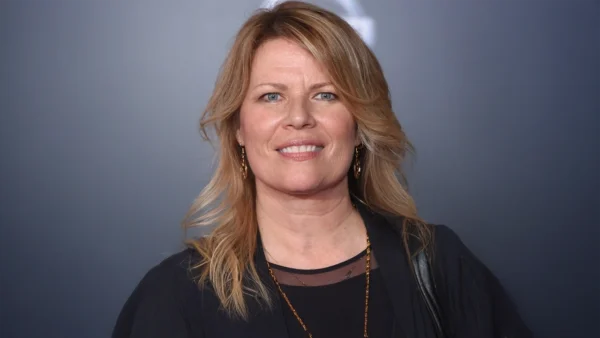

The Architectural Marvel of the Human Voice: The Mary Elizabeth McGlynn Phenomenon
If one were to meticulously catalogue the auditory landscape of the last three decades of Western animation, Japanese anime dubbing, and interactive electronic entertainment, one would inevitably stumble over a rather startling statistical anomaly. Namely, that a disproportionate percentage of the universe’s most formidable cyborgs, imperious royalty, and melancholic supernatural vocalists all share the exact same larynx. This highly industrious piece of anatomy belongs to Mary Elizabeth McGlynn, a woman whose career trajectory serves as a definitive testament to the fact that sometimes, the universe’s most brilliant career counseling comes in the form of a falling horse. To simply call McGlynn a voice actress is to aggressively understate the situation. She is an auditory polymath, an actor, a singer, and an ADR (Automated Dialogue Replacement) director who has spent decades marshaling legions of screaming anime protagonists into coherent English sentences. If you have ever felt entirely intimidated by a cartoon woman or inexplicably moved to tears by a song playing over a polygonal monster, you have likely fallen victim to the McGlynn effect. For those who require rigorous empirical evidence of this phenomenon, a quick perusal of her extensive professional archives on IMDb will confirm that she has, for all intents and purposes, been secretly running the audio entertainment industry from a padded booth in Los Angeles.
The Pre-Med Prelude and the Equine Intervention
Every legendary origin story requires a catalyst. Spider-Man had his radioactive arachnid; Batman had a traumatic incident in a dark alley; Mary Elizabeth McGlynn had a horse named Cher. In her youth, McGlynn harbored thoroughly sensible ambitions of becoming a doctor. She was a pre-med student, presumably on track to spend her life prescribing antibiotics and looking gravely at clipboards. However, the siren song of the theater proved too distracting. After accidentally wandering into an audition for a collegiate production of Hamlet, and inexplicably landing the role of Ophelia, she sensibly abandoned the medical sciences in favor of pretending to be other people for a living. She embarked on a perfectly respectable on-camera acting career, securing guest roles on television staples like Quantum Leap. However, destiny, possessing a tremendously twisted sense of humor, intervened during the filming of Xena: Warrior Princess in New Zealand. While executing a stunt that involved an angry mob and a hanging, a horse, the aforementioned Cher, reared up and rolled entirely over her, dislocating her kneecap. Finding herself abruptly immobilized, McGlynn pivoted to the one acting medium that actively encourages sitting in a chair in the dark: voiceover. One can only assume that, somewhere out in the world, a very clumsy horse is owed a highly prestigious industry award for services rendered to English dubbing.
The Director’s Chair: Herding Cats and Space Cowboys
Having successfully transitioned into the vocal arts, McGlynn soon discovered that she possessed a rather unique superpower: the ability to organize chaos. In the late 1990s, the process of dubbing Japanese animation into English was often a frantic, wild-west affair involving questionable translations and actors trying to match the lip flaps of highly caffeinated two-dimensional characters. The producers at ZRO Limit Productions noted her keen theatrical ear and asked if she might fancy a go at directing. Her trial by fire was a little-known, exceedingly obscure space-jazz project called Cowboy Bebop. As the ADR director for the English dub , McGlynn was tasked with taking Shinichirō Watanabe’s masterpiece and ensuring it did not sound like a disjointed tragedy in English. The resulting dub is widely considered to be the absolute gold standard of the industry, a legendary piece of media that proved English-speaking actors could, in fact, sound effortlessly cool while discussing bounty hunting and bell peppers. McGlynn also stepped up to the microphone herself to voice Julia, the tragic, elusive femme fatale who spends the entirety of the series being spectacularly mysterious. Her success in the director’s chair quickly turned her into the industry’s foremost wrangler of animated shouting. She served as the ADR director for sprawling, lung-busting epics like Naruto and Bleach, as well as highly existential lupine dramas like Wolf’s Rain. Later, she would expand her directorial dominion into Western animation , expertly guiding the vocal performances for beloved series such as Tangled: The Series, She-Ra and the Princesses of Power, and the intergalactic aeronautics of Star Wars Resistance. She is the unseen general, orchestrating the emotional beats of the universe from behind a mixing desk.
The Voice Behind the Visor: Commanding the Cosmos
Of course, one cannot simply direct the madness; occasionally, one must step into the booth and deliver a performance so imperious that it straightens the spines of everyone in the immediate vicinity. When casting directors require a woman who sounds like she could comfortably dismantle a geopolitical infrastructure before lunchtime, McGlynn is the undisputed first choice.
Major Kusanagi and the Art of Robotic Stoicism
Nowhere is this more evident than in her definitive, career-defining turn as Major Motoko Kusanagi in Ghost in the Shell: Stand Alone Complex. Voicing a cybernetic squad leader who is perpetually pondering the philosophical boundaries of the human soul while simultaneously engaging in high-octane gunfights is no small feat. McGlynn’s performance is a masterclass in vocal restraint. She imbues the Major with a cold, terrifying authority that is completely devoid of cartoonish exaggeration, proving that the most intimidating person in the room is usually the one who doesn’t have to raise her voice.
Royalty, Ninjas, and Intergalactic Bureaucrats
Her resume is a sprawling taxonomy of highly competent, wildly dangerous women. She voiced the fiercely nationalist, purple-haired tactician Cornelia li Britannia in the geopolitical chess match Code Geass: Lelouch of the Rebellion. In the realm of mystical ninja warfare, she provided the soothing yet deadly tones of Kurenai Yuhi in Naruto. Video game enthusiasts will instantly recognize her as the ice-cold Irish assassin Nina Williams in the Tekken franchise, and as the elder goddess Cetrion in Mortal Kombat 11. Even the Disney machine could not resist her specific brand of authoritative menace, casting her as the ruthlessly efficient Imperial Governor Arihnda Pryce in Star Wars Rebels. It is a voice built for giving orders, launching armadas, and occasionally, plunging the galaxy into profound despair.
The Siren of Foggy Towns: The Silent Hill Years
Yet, to categorize McGlynn purely as a commander of armies and a director of space cowboys is to ignore the most gloriously bizarre chapter of her career. In the early 2000s, the universe decided that what McGlynn really needed to do was sing trip-hop rock ballads about psychological torment for a survival horror video game. Beginning with Silent Hill 3, McGlynn forged a legendary creative partnership with composer Akira Yamaoka. The Silent Hill franchise is famous for its suffocating fog, its abstract fleshy monsters, and its profoundly unsettling atmosphere. Yamaoka realized that the perfect auditory counterpoint to this nightmare was McGlynn’s deep, rich, and intensely emotive singing voice. Tracks like “You’re Not Here,” “Room of Angel,” and “Waiting For You” became anthems for a generation of traumatized gamers. McGlynn delivered lyrics concerning abandonment, existential dread, and the occasional demonic cult with the soulful, velvet-lined power of a classic lounge singer performing at the end of the world. It was a bizarre, brilliant juxtaposition—beautiful, melancholic pop-rock playing over a game where you hit nurses with steel pipes. Her vocal contributions elevated the franchise’s soundtracks from mere background noise into standalone works of art, proving that one can, indeed, rock out while hiding from a man with a geometric shape for a head.
A Legacy Forged in the Booth
Today, Mary Elizabeth McGlynn stands as a towering pillar of the voice acting community, sharing her life and a ridiculous amount of industry anecdotes with her husband, the equally legendary voice actor Steve Blum. Together, they essentially represent a localized monopoly on the gravelly and authoritative sounds of modern animation. She has survived the grueling evolution of an entire industry, moving seamlessly from the chaotic, duct-taped dubbing sessions of the nineties to the polished, multi-million-dollar voiceover productions of the modern era. She has directed our childhoods, voiced our heroes, and provided the backing track to our digital nightmares, all while maintaining the dry, unflappable wit of a woman who knows exactly how absurd it all is. So, the next time you boot up a console or stream an animated epic, and you hear a woman’s voice that makes you immediately want to sit up straight and apologize for your poor posture, take a moment to appreciate the sheer, unbridled majesty of the situation. It is the sound of absolute authority, the echo of a thousand fictional battlefields, and a persistent, joyful reminder that sometimes the best thing that can possibly happen to a burgeoning medical career is a sudden, high-speed collision with a very large farm animal.
Learn how D.C. Douglas Annoyed Mary Elizabeth McGlynn:Voice Actors D.C. Douglas Knows and Loves!


OR CHECK OUT THE LATEST BLOG DROPPING:D.C. Douglas Joins Disney+’s Vampirina Season 2 as Speaker of Books
Film & Television work. 🎙️HEAR MY VOICE:
Voice Over work. 🎪CONVENTIONS:
Book me for your con! 🩶THE DC STORE:
Learn about Cameos!
I'm such a whore. 🎪LIVE IN PERSON:
Public nuisance posts. 🗣️INTERVIEWS:
Posts from my butt. 🍷GREEN ROOM:
BTS & L.A. life. 🧪RESIDENT EVIL WORLD:
Wesker fetish? 💫TALENT SPOTLIGHT:
Stalker crib notes.