
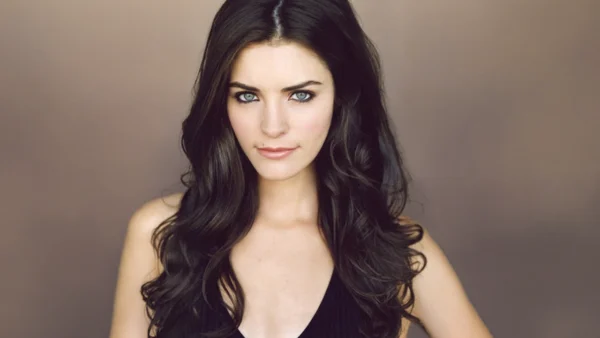

The Scintillating Rise of Nina Fehren
Human civilization spent millennia developing agriculture, philosophy, and the combustion engine, all so that entertainment executives could eventually hire actors to pretend to get eaten by giant corporate bio-weapons. Enter Nina Fehren, an individual who has managed to carve out a distinct profile in modern media by providing the physical and vocal scaffolding for a high-society corporate sociopath. Her career path avoids the traditional theatrical template, moving instead through indie horror, television parts, and multi-million-dollar video game motion-capture stages.
Fehren possesses an IMDb profile that records a curiously impactful sequence of pop-culture footprints. To verify the absolute reality of her existence, one can cross-reference her official credentials via her verified IMDb Profile. Her career trajectory demonstrates how an actor can secure a permanent slot in fan conventions without ever having to endure the traditional agony of a multi-season sitcom contract.
Early Career and the Cannibalistic Vanguard
Before she was guiding corporate bioterrorism, Fehren was busy surviving the hazardous landscapes of low-budget horror cinema. Her early portfolio includes an appearance in the 2008 horror-comedy film The Cook, directed by Gregg Simon. The plot, which follows a psychotic chef who treats a sorority house like an open-air meat market, demanded that Fehren react to culinary-themed butchery with earnest terror. (One can only assume that dealing with a fictional cannibalistic chef is excellent preparation for negotiating with Hollywood casting directors.) The role offered little in the way of Shakespearean soliloquy, but it did establish her baseline capacity for high-stress screen presence.
During this same developmental phase, Fehren collected typical structural television credits. She populated the background architecture of mainstream television, appearing as a cashier in a 2010 episode of the Disney Channel comedy series Sonny with a Chance (a production that managed to feature both teenage angst and an unexpected guest appearance by former bodybuilder Lou Ferrigno). These early roles provided the industrial foundation required for the sudden, highly weird leap into digital physical performance that would follow immediately after.
Breakthrough as a Tricell Executive
The pinnacle of Fehren’s cultural permanence arrived in 2009 with the release of Capcom’s flagship survival-horror title, Resident Evil 5. In a casting decision that completely altered her career trajectory, Fehren was hired to provide the complete physical identity for the game’s secondary antagonist, Excella Gionne. She did not merely read lines in a dark booth; she provided the facial modeling, the full-body motion capture, and the vocal track for the character. The role transformed her into the literal face of a massive global media franchise, a factual milestone detailed in the historical retrospective on Albert Wesker’s Resident Evil History.
Excella Gionne was not a standard zombie. She was a sophisticated corporate executive running the African division of the pharmaceutical giant Tricell, operating with a mixture of aristocratic disdain and terrifying chemical ambition. Fehren had to execute high-stakes dramatic scenes while wearing an array of motion-capture ping-pong balls, interacting with fellow actor Ken Lally (who portrayed the physical side of Albert Wesker). The character eventually meets a profoundly messy demise, mutating into a towering, multi-tentacled abomination known as Uroboros Aheri on the deck of a volcanic research vessel. Fehren managed to transition from corporate arrogance to agonizing biological collapse with remarkable professionalism.
First-Hand Performance and Craft Analysis
From an internal industry perspective, the technical execution of Excella Gionne is a masterclass in the exhausting physical demands of early-generation motion capture. Acting inside a volume (the empty, camera-lined grid where motion capture occurs) requires an actor to conjure an entire corporate laboratory out of thin air while maintaining strict posture control. Fehren’s performance succeeds primarily due to her calculated use of vocal registration and physical weight distribution.
To project power against the caricature-like villainy of Albert Wesker, Fehren utilized a distinct mid-Atlantic vocal placement, dropping her pitch slightly at the end of technical jargon to assert corporate dominance. Physically, she engineered a rigid, high-status posture that communicated aristocratic breeding, utilizing sharp head tilts and deliberate pauses to control the pacing of the digital cinematic sequences. When the script required her character’s biological betrayal and subsequent mutation, the vocal demands shifted instantly from controlled arrogance to ragged, high-intensity diaphragmatic screaming. This specific transition requires immense vocal control to prevent laryngeal damage while matching the erratic, violent physical movements dictated by the stunt directors.
Subsequent Television and Screen Presence
Following her digital mutation, Fehren returned to the comparatively calm waters of live-action television. She appeared in the second season of the ABC legal drama series How to Get Away with Murder, playing the minor role of Kennedy in the episode titled “She Hates Us.” Shifting from a global bioweapon conspiracy to a tense legal thriller required an immediate calibration of scale. On television, the sprawling gestures required by a 2009 video game engine had to be replaced with microscopic facial adjustments suited for high-definition close-ups.
Her live-action resume also includes projects like the disaster film Turbulent Skies, directed by B-movie icon Fred Olen Ray, and minor engagements on series such as ABC’s Revenge. In each instance, Fehren operated as a highly reliable industrial component, executing her scenes with a level of efficiency that kept productions on schedule. (In Hollywood, being an actor who hits their marks without causing a production shutdown is considered a minor miracle.) Her ability to pivot between the frantic world of low-budget genre films and the hyper-polished environments of network television speaks to a highly practical, unpretentious approach to the modern acting economy.
The Structural Legacy of a Digital Performance
The broader significance of Nina Fehren’s career rests on how it illustrates the evolution of performance capture at the end of the first decade of the 2000s. She entered the video game industry at the exact moment characters were transitioning from blocky polygons into highly detailed digital clones of real human beings. By capturing her exact facial birthmarks and physical cadence, Capcom turned Fehren into an immortal piece of digital architecture.
While traditional screen actors often struggle to maintain relevance as television trends fluctuate, Fehren remains anchored to a multi-billion-dollar franchise that continues to generate remakes, spin-offs, and retrospective merchandise. Her career remains an example of how a modern performer can achieve international recognition by lending their physical anatomy and vocal cords to a fictitious pharmaceutical executive who gets converted into a giant monster by a mutant virus. It is a strange way to earn a living, but it is undeniably effective.
Now Read The VO Dirt!Voice Actors D.C. Douglas Knows and Loves!


OR CHECK OUT THE LATEST BLOG DROPPING:D.C. Douglas Returns as Lysandre in Pokémon Masters EX
Film & Television work. 🎙️HEAR MY VOICE:
Voice Over work. 🎪CONVENTIONS:
Book me for your con! 🩶THE DC STORE:
Learn about Cameos!
I'm such a whore. 🎪LIVE IN PERSON:
Public nuisance posts. 🗣️INTERVIEWS:
Posts from my butt. 🍷GREEN ROOM:
BTS & L.A. life. 🧪RESIDENT EVIL WORLD:
Wesker fetish? 💫TALENT SPOTLIGHT:
Stalker crib notes.