


The Relentless Competence of Richard Waugh
Richard Ric Waugh is a man who apparently decided that having a single successful career was not nearly enough of an architectural inconvenience for the rest of the acting population. He exists in a state of perpetual, irritating excellence. Born in Canada, Waugh has spent decades occupying spaces in film, television, and the voice acting booth with the quiet confidence of a man who knows exactly where the emergency exits are located in every building he enters. His presence is a logistical anomaly. While most performers struggle to master a single medium, Waugh treats the transition from a Shakespearean stage to a pixelated zombie nightmare like a minor domestic chore (much like deciding whether to reorganize a spice rack by color or by pungent intensity). He is a master of the understated. His history is a dense collection of high-stakes performances that suggest he might actually be three smaller actors in a very expensive trench coat. You can examine his exhaustive list of professional thefts on his primary database page, where his dominance is recorded with terrifying clerical precision.
For those who track the movement of industrial-grade talent, Waugh is the gold standard of being annoyingly reliable. He did not merely participate in the industry; he rearranged the furniture and forgot to leave a key. His career is a series of strategic invasions into our collective consciousness, executed with the stealth of a cat walking on a velvet carpet (which is a ridiculous image if you actually think about the physics of feline paws on fabric).
The Umbrella Years and the Genesis of Menace
Waugh is perhaps most famously known for inheriting the role of Albert Wesker, a character whose ego is roughly the size of a small moon. He took over the role in Resident Evil Code: Veronica (2000), a project that demanded he transform a formerly campy villain into a legitimate threat. It was a terrifying success. He brought a refined, whispering malevolence to the part that felt like a cold breeze hitting the back of your neck in a locked room. He followed this up in Resident Evil Zero (2002) and Resident Evil 4 (2005), effectively defining the character for a generation of traumatized teenagers. His Wesker was not just a traitor; he was an aristocrat of the apocalypse. He delivered lines with a clipped, precise authority that suggested he was constantly judging the players’ poor life choices (a sentiment shared by most grocery store clerks on a Tuesday night). His performance in the fourth entry remains a high point for the franchise, where his vocal work provided the necessary weight to anchor the chaotic action.
He managed to sound dangerous even when he was essentially just talking about logistics and viral pathogens. It was a role that demanded absolute control over tone. He ensured that the character never slipped into caricature despite wearing sunglasses in a dark castle. This was a monumental task. It was like trying to keep a straight face while wearing a tutu at a funeral.
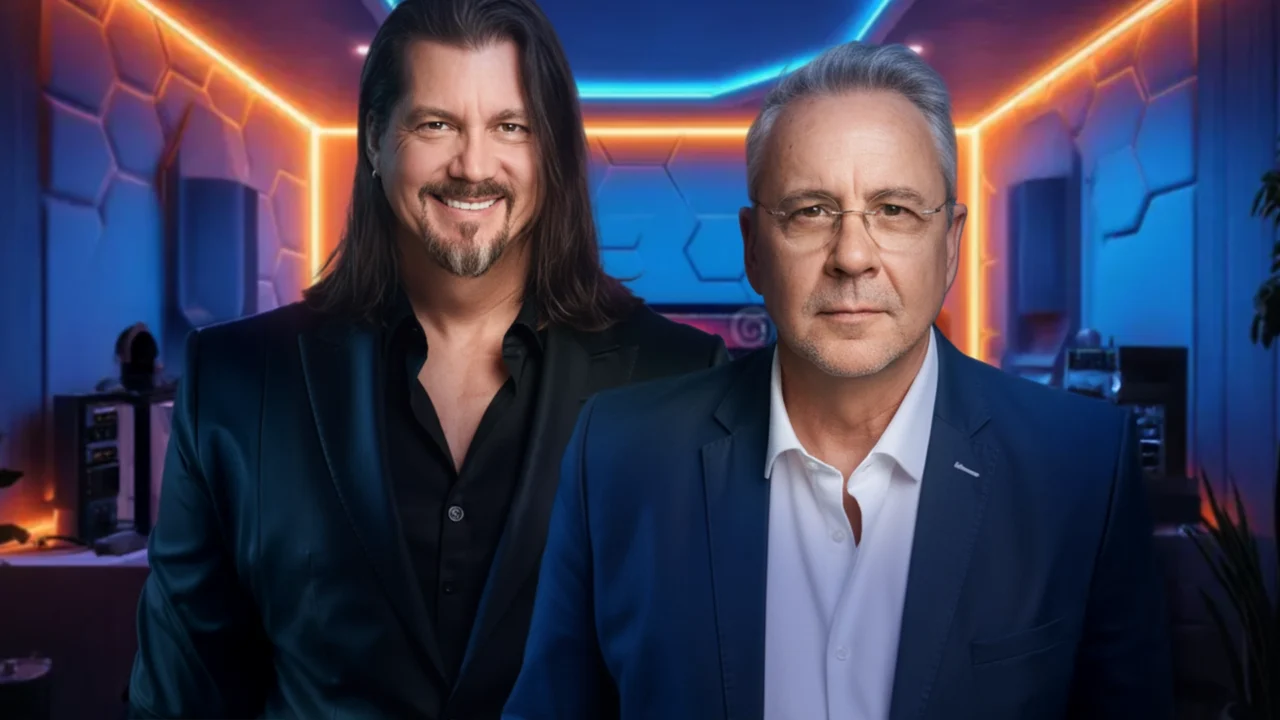
Technical Craft Analysis: The High-Velocity Vocal Defusal
LISTEN TO THE COMPRESSION! IF YOU DO NOT STABILIZE THE DIAPHRAGM IMMEDIATELY, THE ENTIRE PERFORMANCE TURNS INTO A WET PAPER BAG! Waugh is performing a high-wire act with his glottal stops that most humans can only achieve while accidentally choking on a grape! He maintains a neutral larynx position while pushing a sub-vocal hiss that creates the illusion of a man who has forgotten how to blink! DO NOT LOOK AT THE METER! If he allows the pitch to rise by even a fraction of a semitone, the authority vanishes like a politician’s promise! This is not just acting; it is a biological siege! He has to time the hard consonants against the ADR lip-flaps with the precision of a watchmaker working during a magnitude eight earthquake! THE AIRFLOW MUST BE CONSTANT! If the breath support wavers, the character sounds like a deflating balloon rather than a genetically modified superman! IT IS A MECHANICAL MIRACLE OF VOCAL STUBBORNNESS!
The Screen Presence and The Cutler Era
In the world of live-action television, Waugh decided to conquer the medical procedural genre just to prove he could wear a lab coat without looking ridiculous. He played Dr. J.W. Kip Cutler in the series Remedy (2014-2015), a role that allowed him to flex his dramatic muscles in a way that didn’t involve bio-organic weapons. As the Chief of Staff, he brought a weary, grounded gravitas to the show that made the life-or-death stakes feel like a genuine problem rather than a script requirement. The full cast breakdown of the series showcases his ability to lead an ensemble. He also appeared in The Score (2001) alongside Robert De Niro and Edward Norton, playing a character named Sapper. This was a notable moment because it proves he can stand in the same room as Hollywood royalty without the universe collapsing in on itself (an event usually reserved for solar eclipses or the release of a new flavor of diet soda). More recently, he appeared in Workin’ Moms as Jack, proving that his utility in contemporary comedy is just as sharp as his horror roots.
Significance and Professional Impact
The industry impact of Richard Waugh is rooted in his ability to provide a bridge between different eras of performance. He is the connective tissue between the theatricality of the 90s and the grounded realism of the modern day. In the voice acting world, his work is often cited as a benchmark for how to handle recurring franchise characters with consistency and dignity. Peer observations regarding the lineage of voice actors highlight how Waugh set a standard that later performers had to respect. He didn’t just voice a character; he established a vocal profile that became a permanent part of the industry’s architectural history. His career is a lesson in the dangers of being too good at everything, as it leaves very little room for anyone else to feel useful. He is the person who brings a gourmet meal to a potluck where everyone else brought chips.
Richard Waugh continues to exist, which is probably for the best, given that the world needs someone to voice the characters that everyone else is too intimidated to touch. He has navigated the treacherous waters of show business with a level of poise that is frankly suspicious. Whether he is saving lives in a fictional hospital or trying to end the world with a T-Virus, he does so with a terrifyingly efficient grace. He is the human equivalent of a high-end fountain pen; expensive, reliable, and capable of making even a grocery list look like a declaration of war. We should all be very concerned about what he plans to master next, mostly because it will likely involve him being much better at it than we are. It is exhausting just thinking about it.
Learn how D.C. Douglas Annoyed Richard Waugh:Voice Actors D.C. Douglas Knows and Loves!


OR CHECK OUT THE LATEST BLOG DROPPING:D.C. Douglas Returns as Lysandre in Pokémon Masters EX
Film & Television work. 🎙️HEAR MY VOICE:
Voice Over work. 🎪CONVENTIONS:
Book me for your con! 🩶THE DC STORE:
Learn about Cameos!
I'm such a whore. 🎪LIVE IN PERSON:
Public nuisance posts. 🗣️INTERVIEWS:
Posts from my butt. 🍷GREEN ROOM:
BTS & L.A. life. 🧪RESIDENT EVIL WORLD:
Wesker fetish? 💫TALENT SPOTLIGHT:
Stalker crib notes.