

WANT MORE? SEE D.C.'S VIDEO PLAYLISTS:D.C.'S CAREER IN CAROUSEL


OR CHECK OUT THE LATEST BLOG DROPPING:D.C. Douglas Joins Disney+’s Vampirina Season 2 as Speaker of Books
Vice Sports Out of Bounds: Official Credits
- Narrator: D.C. Douglas
- Production Studio: Vice Studios
- Network: Vice TV (Viceland)
- Genre: Sports Documentary / Docuseries
- Executive Producers (Vice Media): Shane Smith, Suroosh Alvi, Eddy Moretti
- Executive Producer (Vice TV): Lee Hoffman
- Original Broadcaster: Vice TV
- Notable Episodes:
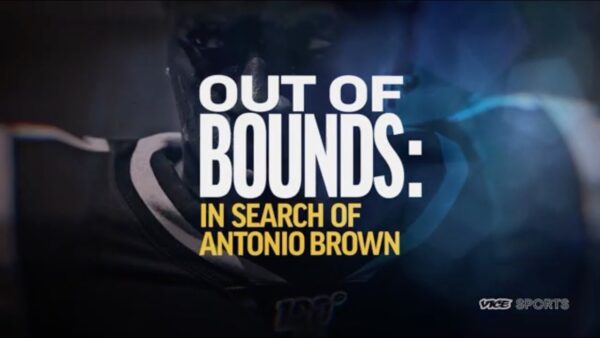
- In Search of Antonio Brown
- Bill Belichick & Jordon Hudson
- The Dark Side of the Cage
- Production Location: Los Angeles / New York / Global Locations
The Velvet Fog Over the Playing Field of Madness
If one were to categorize the general landscape of televised sports reportage, one might uncharitably describe it as a parade of perspiring gentlemen in unfortunately shiny suits, shouting statistics about inflatable balls at one another until time itself loses all meaning. It is a dreadful affair, usually involving far too much bunting and notNearly enough existential dread.
Fortunately, for those of us who prefer our athletics served with a side order of cultural bewilderment and potential bodily harm, there exists the peculiar universe of Vice’s sports coverage. Often categorized under umbrellas like *Vice World of Sports* or colloquially referred to as their “out of bounds” segments, these are not tales of millionaires gently tapping golf balls on manicured lawns. No, these are dives into the gladiatorial fringes of human endeavor.
But such chaotic imagery requires a steady hand at the tiller, lest the viewer succumb to the sheer madness of it all. Enter the aural anchor of these bizarre odysseys: the impeccably smooth, slightly menacing vocal stylings of Mr. D.C. Douglas.
Not Your Uncle’s Sunday Afternoon Cricket
To understand the “plot” of these Vice Sports explorations, one must first abandon the traditional definition of “sport.” We are not discussing who scored the most points in the third quarter. We are discussing why an entire village has decided that the pinnacle of human achievement involves rolling a giant wheel of cheese down a near-vertical hill while dozens of people break their clavicles chasing it.
The narrative arc of a typical segment involves dropping a somewhat bewildered correspondent into a subculture where physical exertion is inextricably linked to local politics, ancient grudges, or simple, unadulterated boredom. The “plot” is rarely about who wins or loses; it is an anthropological study of why human beings will subject themselves to incredible hardship for a plastic trophy or, more often, bragging rights in a very specific pub.
From underground fighting rings in forgotten corners of Eastern Europe to the baffling intensity of competitive cup stacking, the subject matter is inherently absurd. Yet, it is presented with a straight face, demanding we take the ridiculous seriously. And no one helps us achieve that state of suspended disbelief quite like the narrator.
The Voice That Sounds Like It Knows Where the Bodies Are Buried
A documentary of this nature lives or dies by its voiceover. A standard sports announcer would sound preposterous here; an overly excitable shout-caster would simply induce a migraine. The genius of casting D.C. Douglas to narrate these descents into athletic madness lies in his astonishing sangfroid.
Douglas possesses a vocal timbre that one might describe as “velvet draped over a loaded pistol.” It is sophisticated, articulate, and carries a distinct undercurrent of knowing detachment. He sounds like a man who has seen everything, found most of it mildly disappointing, but is willing to describe it to you over a very dry martini.
When on-screen visuals depict two large gentlemen attempting to concuss one another in a muddy field somewhere outside of Glasgow, Douglas does not raise his voice. He does not express shock. He merely observes the carnage with the arch tones of a disappointed headmaster reading the breakfast menu at a boarding school for delinquent aristocrats.
This juxtaposition is absolutely marvelous. The more chaotic the physical action becomes, the smoother Douglas’s delivery gets. He serves as the sane tour guide through an insane asylum, his voice providing a necessary distance that allows us to marvel at the spectacle without necessarily feeling implicated in it. It is a performance of delicious irony, grounding the bizarre in a tone of utter normalcy.
The Architects of the Absurd
These explorations into the sporting fringe are brought to you by the usual suspects at Vice Media, a studio that apparently looked at traditional journalism, decided it lacked sufficient quantities of adrenaline and questionable life choices, and proceeded to set fire to the rulebook.
The segments often fell under the purview of the Viceland channel’s programming slate. The production teams behind these efforts are tasked with finding the most obscure athletic subcultures on the planet and convincing them to sign release forms. It is a credit to the producers, often working under executive producers that in that era included figures like Shane Smith, Eddy Moretti, and Spike Jonze, that they managed to capture such raw humanity amidst the ridiculousness.
Verifying the specifics of these productions confirms the extensive involvement of D.C. Douglas as a recurring narrator across various Vice properties, lending his distinct pipes to their signature blend of grit and glossy production values. You can find his extensive list of credits, including his narration work, on his IMDb profile , which catalogs a career built on sounding wonderfully sinister.
The marriage of Vice’s gonzo filmmaking style with Douglas’s sophisticated delivery created a unique subgenre of sports documentary: one where the athletics are secondary to the sheer, baffling spectacle of the human condition throwing itself against a wall for entertainment.
One is left with the distinct impression that if the apocalypse were televised as a sporting event, D.C. Douglas would be the only logical choice to call the play-by-play, calmly noting the end of civilization as if commenting on a particularly disappointing dressage performance. And frankly, one wouldn’t have it any other way.
Film & Television work. 🎙️HEAR MY VOICE:
Voice Over work. 🎪CONVENTIONS:
Book me for your con! 🩶THE DC STORE:
Learn about Cameos!
I'm such a whore. 🎪LIVE IN PERSON:
Public nuisance posts. 🗣️INTERVIEWS:
Posts from my butt. 🍷GREEN ROOM:
BTS & L.A. life. 🧪RESIDENT EVIL WORLD:
Wesker fetish? 💫TALENT SPOTLIGHT:
Stalker crib notes.