
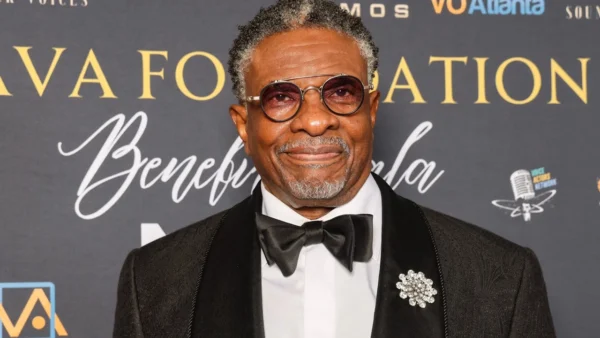

Early Administrative Developments in the Life of Keith David
Keith David, a man whose voice could plausibly authorize a military campaign or gently narrate the end of the universe, was born on June 4, 1956 in Harlem, New York. This event was recorded without much fanfare, although hindsight would later reveal that the arrival of such a resonant baritone into the ecosystem of American entertainment would eventually cause minor tremors across film, television, animation, and video games. His mother, Dolores Dickenson, worked as a manager for the New York Telephone Company. His father, Lester Williams, held employment in payroll operations. Both occupations involved numbers, schedules, and sensible shoes. Their son, meanwhile, would develop a voice that sounded like it had been forged inside a cathedral bell.
As a child, David reportedly discovered acting while participating in a school production of The Wizard of Oz. It is often the case that such discoveries are described as magical moments of destiny. In reality, they typically involve a borrowed costume, a slightly crooked spotlight, and someone backstage trying to remember where the fog machine switch is located. Nevertheless, the experience proved consequential. Acting was selected as the preferred professional direction, a decision that would eventually lead him to study at the Juilliard School’s Drama Division, where he was part of Group 8 alongside fellow performers who were likewise attempting to make theatrical history while also locating reasonably priced coffee.
The Film Career, or A Series of Increasingly Impressive Administrative Entries
Early Cinema and the Arrival of a Commanding Presence
Keith David’s film career began with a project that might be described as unusually visible for a debut. In 1982 he appeared in John Carpenter’s The Thing, portraying Childs, a flamethrower-carrying member of a doomed Antarctic research team. The film has since been recognized as one of the most influential horror films of its era, though at the time audiences were primarily concerned with the alarming number of creatures that appeared to be made of teeth and bad intentions.
This role established David as an actor capable of delivering intensity without excessive theatrical wobbling, which is a useful skill in stories involving shape-shifting extraterrestrials. The performance was followed by appearances in films such as They Live in 1988, another Carpenter production, in which David delivered one of the more memorable alley fight sequences in modern cinema. The fight lasts long enough to qualify as a small athletic event and involves a pair of sunglasses that absolutely must be worn.
Throughout the 1980s and 1990s he accumulated credits in films such as Platoon, Men at Work, and Dead Presidents. Each project required David to bring a mixture of authority, presence, and vocal gravity, as though every line of dialogue were being delivered from a podium somewhere inside the United Nations.
Television Work and the Management of Many Characters
A Consistent Presence on the Small Screen
Television producers quickly recognized that Keith David possessed the rare ability to make exposition sound like prophecy. This skill proved useful in numerous series. One of his most visible television roles arrived in the HBO drama Crash, where he played Detective Lieutenant Dixon. The performance earned him an Emmy Award for Outstanding Supporting Actor in a Drama Series, which is the industry-approved method for confirming that an actor has performed their job extremely well while wearing complicated wardrobe pieces.
David also appeared in a wide range of series including Community, where he portrayed the increasingly bewildered Vice Dean Laybourne, a character involved in a secretive institutional conspiracy centered around an air conditioning repair school. The existence of this storyline raised several questions about educational administration but provided ample opportunity for David’s voice to glide ominously across otherwise ordinary dialogue.
Additional television work includes appearances in productions such as Greenleaf, Enlisted, and numerous guest roles across decades of programming. At this stage his presence on television had become less of a casting choice and more of an infrastructural upgrade.
Animation and the Voice That Launched a Thousand Villains
Voice Acting as a Strategic Expansion
If an animated production requires a character who sounds capable of announcing the end of civilization or the beginning of a very dignified villain monologue, Keith David tends to appear shortly afterward. His voice acting work has included major roles such as Dr. Facilier in Disney’s The Princess and the Frog, Goliath in the acclaimed animated series Gargoyles, and the Arbiter in the Halo video game franchise.
The Arbiter role alone placed David inside one of the most recognizable science fiction universes in gaming. His performance gave moral weight and vocal authority to a towering alien warrior navigating questions of honor, loyalty, and intergalactic warfare. All of this was accomplished primarily through vocal performance, which is impressive considering the character also has mandibles.
His extensive work across animation and games is catalogued thoroughly through industry databases such as Keith David’s IMDb page, which reads less like a résumé and more like a government archive documenting several decades of extremely productive storytelling.
The Voice That Narrates Civilization
Documentaries, Narration, and Other Duties Requiring Authority
Beyond acting, Keith David has become one of the most recognizable narrators in documentary television. His narration work includes the long-running PBS series Frontline and numerous historical programs. When David narrates a documentary, events that occurred thousands of years ago suddenly sound like they were approved during a formal committee meeting sometime last Tuesday.
This vocal authority has led to an unusual career distinction. Keith David is one of the few actors whose voice alone can elevate otherwise routine narration into something approaching mythological importance. A documentary about agriculture begins to sound like the founding charter of civilization itself.
A Career That Quietly Became Monumental
Examining Keith David’s career is a little like examining the structural beams of a large building. One eventually notices that he is everywhere. Films, television, animation, video games, documentaries, and the occasional narrative requiring a voice that sounds like a cathedral speaking. His performances rarely demand attention in the flamboyant sense. Instead they operate with quiet authority, as though the universe itself had filed the appropriate paperwork.
Some actors chase iconic roles. Keith David appears to accumulate them through a steady process of professional competence and vocal resonance. The result is a body of work that stretches across genres and decades, each performance delivered with the calm assurance of a man who understands that if a story requires gravity, menace, humor, or the announcement of impending cosmic doom, he can probably handle it before lunch.
And so the record continues to expand. More films appear. More animated villains receive suspiciously excellent voices. More documentaries require someone who can narrate the rise and fall of civilizations without spilling their coffee. Somewhere, presumably, another casting director is opening a folder labeled “Keith David” and writing the words Approved.
Now Read The VO Dirt!Voice Actors D.C. Douglas Knows and Loves!


OR CHECK OUT THE LATEST BLOG DROPPING:D.C. Douglas Joins Disney+’s Vampirina Season 2 as Speaker of Books
Film & Television work. 🎙️HEAR MY VOICE:
Voice Over work. 🎪CONVENTIONS:
Book me for your con! 🩶THE DC STORE:
Learn about Cameos!
I'm such a whore. 🎪LIVE IN PERSON:
Public nuisance posts. 🗣️INTERVIEWS:
Posts from my butt. 🍷GREEN ROOM:
BTS & L.A. life. 🧪RESIDENT EVIL WORLD:
Wesker fetish? 💫TALENT SPOTLIGHT:
Stalker crib notes.