


Spoiler Alert. Obviously.
Albert Wesker slowly rises into frame…
So. The clone has arrived.
I have endured a great deal. Betrayal. Volcanoes. A man whose primary intellectual contribution to any situation is his arm circumference. I was injected with a prototype virus, flung off a cathedral, shot at point-blank range, and swallowed by a bioweapon the size of a building, and I processed all of it with the composure of someone who had already accounted for it. I am not a man who rattles easily.
And yet.
They have done it. They have released Resident Evil Requiem , and with it, the world has now met the inheritor of my darkness. The singular figure that The Connections, in all their considerable criminal infrastructure, could produce as my successor.
They are calling him Zeno.

I allowed myself one breath. Controlled. Measured. Then I laughed so sharply it could have parted a man’s hair from across the room.
Zeno.
Zeno is not a name. Zeno is what autocomplete suggests when you type “Z” and immediately lose confidence. Zeno is what you name a Roomba. Zeno is, and I want you to sit with this, perilously close to Xenu, the extraterrestrial deity that certain individuals whisper about before handing over their credit cards. If you are going to cosplay godhood, at least choose a name that doesn’t sound like a sci-fi cult’s lore entry. At least commit.
And he took my surname. Zeno Wesker. He used my name. My name, which I earned through decades of calculated ruthlessness, viral transcendence, and perfect hair, appropriated by a man who couldn’t even commit to the color scheme.
A Legend Is Not a Template
Let us establish something for the amateurs in the back. My presence was never an aesthetic. I did not wear sunglasses indoors because I thought it was stylish. I wore them because the world had not yet earned the right to look me in the eye. I did not speak in measured tones because I was performing calm. I spoke that way because panic is a symptom of people who didn’t plan far enough ahead.
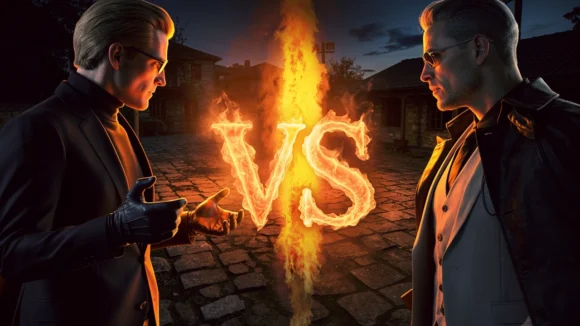
The sunglasses. The coat. The glacial delivery. These were not costume choices, they were architecture. You cannot reproduce them by assembling a mood board and shopping at the right stores.
And Zeno proved this empirically.
He kept the sunglasses. He kept the silhouette. He even kept the superhuman speed, the bullet-dodging, the handgun, my handgun, essentially, wielded by someone who treats it as a prop. But instead of committing to the original palette, he chose a white suit. A white three-piece suit under a black coat, like a man who attended one too many villain galas and decided to “mix it up” on the way out.
He is not reimagining me. He is a photocopy that ran out of black ink halfway through.
The God Complex Without the God
I understand he resents being my clone. That he has made surpassing me, no, erasing me, something of a personal mission. He refuses to acknowledge the origin. He bristles at comparisons. He has made the rejection of my shadow his entire personality.
How charming. How deeply ordinary.
Here is what Zeno has not understood: the inferiority complex is not the character flaw of a man trying to escape his origins. It is proof of the origins. He inherited my ego along with my genetics, and that ego, furious, grandiose, unable to tolerate a shadow, is the most Wesker thing about him. He is screaming “I am nothing like that man” with the exact cadence and conviction I would use. He is me, arguing with a mirror and losing.
He is not my rival. He is my footnote. A footnote that has absorbed enough of my essence to spend its entire existence furious about being a footnote.
There is a difference between a tyrant and a tribute act. One reshapes reality. The other performs my catalog and insists the audience understand that he has “moved beyond it.”
Also, and I say this not without a certain dark pleasure, he has mutations. On his face. Dark, tendril-like markings crawling up his neck and cheek. I emerged from the Progenitor virus as something transcendent, something singular. He emerged looking like a man who fell asleep on a printer.
The Milquetoast Cloning Job
And then there’s The Connections. His organization. His shadow empire. His supposedly sinister network operating in the dark.
The Connections.
That name alone. I have faced BOWs with more brand identity. Umbrella had Gothic architecture, a Latin motto, a logo that struck existential dread into government briefing rooms. Tricell had panache. Even those Molded-adjacent disaster fetishists in Louisiana had a coherent aesthetic. The Connections sounds like a LinkedIn group for people who attended the same regional bioterrorism seminar and lost touch.
Zeno runs villainy the way a middle manager runs Q3 projections. Quietly. Efficiently. Bloodlessly. No theater . No spectacle. No sense that something historic is happening.
I attempted complete global saturation. With conviction. With infrastructure. Zeno, apparently, attempted complete global saturation and was stopped by a woman who had been a biohazard survivor for approximately four days, and a man whose Raccoon City Syndrome had him coughing up blood through the final act.
This is not a slight against Leon. Leon is indestructible through sheer charisma and impossible hair. The slight is entirely against Zeno.

Twas The Night Before Christmas
COVID-19 & Albert Wesker

"Life With Al"

Albert Wesker Quotes Donald Trump

Better Than Trump

A Weaker/Siri Love Affair

An Albert Wesker Christmas Message

Albert Wesker - Legion Alliance

Albert Wesker Old Spice Ad
Albert Wesker Bloopers Reel

Albert Wesker Says Please

Deep Thoughts on RE4

A #WeskerWeek Message 2015
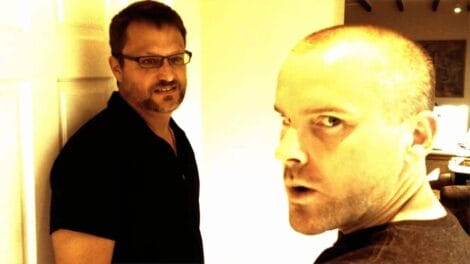
When Voice Actors Collide
Wesker/Douglas 10th Anniversary

Resident Evil 15 Years
"Isle of the Dead" Syfy Encore Promo
"Isle of the Dead" (2016)

Apocalypse Kiss (2014)
Apocalypse Kiss Promo

Last Albert Wesker VGA Interview
Resident Evil 5

What inspired Erotic Fanfic Show

I"ll Kill You!
When Wesker Met Wesker
The FINAL Notorious Erotic Fanfic Show!
Voice of Albert Wesker 2007-2019
The Inside Jokes You’ve Earned
Longtime fans of this franchise understand something the boardrooms do not: Resident Evil works precisely because it commits to its own absurdity with a straight face and a firm handshake. The boulder. You know the one. A man, a man with arms that have their own gravitational field, punched a boulder into a volcano, and the game expected us to take it seriously, and we did, because the game did. The opera-singing dwarf. The merchant materializing from the shadows of a war zone to ask what we’re buying. Leon sliding under laser grids in a tuxedo. The way “STARS” can be screamed like a liturgical invocation.
These things work because the delivery is unflinching. Because sincerity, at sufficient intensity, becomes its own form of genius.
Zeno does not deliver. He references. He stands in my silhouette and hopes the audience fills in the rest. Fans smell that immediately. You cannot fake the cadence of a man who believes he has already won and is simply waiting for you to catch up.
Also, and I cannot stress this enough, the sunglasses had better stay on. If they slip off during a boss fight, I will consider it a canonical failure of character.
Though I admit: watching him get beheaded by a tentacle while a man in a labcoat called him a “cheap imitation” to his face, in what were presumably his final moments of consciousness, does suggest the sunglasses were the least of his problems.
On the Subject of His Death
I must address this.
I was killed by two rocket launchers and a volcano. The full geological and military cooperation of the planet’s most aggressive continent was required to put me down, and even then, the internet spends years debating whether it took. There is a pyramid of inquiry dedicated to whether I survived. People write treatises. They make compelling arguments using frame data and narrative subtext. My death is a discourse.
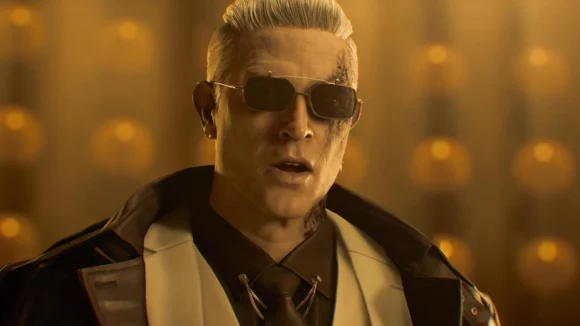
Zeno was decapitated by a man who grew arms on a Tuesday. Victor Gideon, a former researcher, a man who had presumably spent decades in a laboratory with precisely the kind of posture that entails, sprouted a tentacle, declared Zeno a “cheap imitation,” and removed his head from the premises.
No discourse. No pyramid of inquiry. No treatises.
He didn’t even get to finish a monologue.
This is the distance between a legacy and a reference. This is why the word “imitation” is not just thematic texture, it is, apparently, the last thing you hear before you lose your head in a laboratory.
What This Actually Is
A clone is only interesting when it reveals something new about the original.
When it forces you to re-examine the template. When it unsettles something you had assumed was settled. A pale imitation in a borrowed white suit does none of that. It just reminds you what you’ve seen before, less effectively, with a worse name and a worse complexion.
Zeno is not a successor. He is a reference. He is what happens when a creative team asks “what if Wesker, but he resented being Wesker” and then forgot to give the answer a personality that outlasts a single game.
I was not built to be referenced. I was built to be endured.
So enjoy your Requiem. Your secondhand god in his secondhand name, in his white suit and borrowed sunglasses, dispatched by a tentacle before he could even see the credits. Just don’t confuse his outline for legacy . Don’t look at a photocopy of a shadow and call it the source of the light.
If I return, and that particular conversation remains between me and inevitability, you will know. You will feel it in the silence before the music cuts. In the calm, unhurried voice that doesn’t need to shout your name to own you. In the realization, arriving just slightly too late, that the sunglasses were never a costume.
They were a warning.
Imitation is not flattery. It is surrender with extra steps.
And a white suit.

Albert Wesker Voice Actors 1996-2026
ALBERT WESKER DEMANDS YOU VISIT:RESIDENT EVIL WORLD


OR CHECK OUT THE LATEST BLOG DROPPING:D.C. Douglas Joins Disney+’s Vampirina Season 2 as Speaker of Books
Film & Television work. 🎙️HEAR MY VOICE:
Voice Over work. 🎪CONVENTIONS:
Book me for your con! 🩶THE DC STORE:
Learn about Cameos!
I'm such a whore. 🎪LIVE IN PERSON:
Public nuisance posts. 🗣️INTERVIEWS:
Posts from my butt. 🍷GREEN ROOM:
BTS & L.A. life. 🧪RESIDENT EVIL WORLD:
Wesker fetish? 💫TALENT SPOTLIGHT:
Stalker crib notes.