
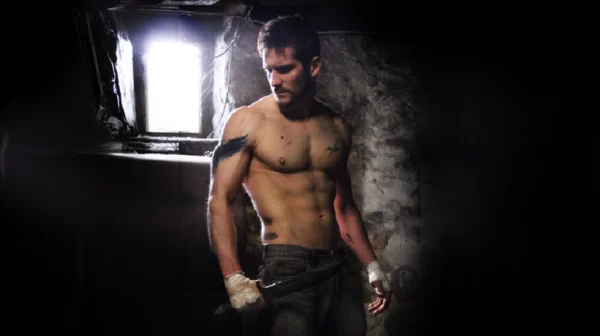

Nick Apostolides: The Man, The Voice, The Legend Who Survived Raccoon City and a Career in Real Estate
There are, broadly speaking, two kinds of people in this world: those who, upon realising their calling in life, pursue it with immediate and single-minded determination, and those who first spend several years selling property in Boston before eventually becoming one of the most recognisable voices in survival horror gaming. Nick Apostolides is emphatically, magnificently, the second kind of person. His journey from open-house viewings to Raccoon City is the sort of career trajectory that could only make sense in retrospect, which is precisely what makes it so thoroughly worth examining.
Origins: Boston, Ambition, and the Road Not Immediately Taken
Nicholas Apostolides was born on the first of March in Boston, Massachusetts, a city historically associated with revolutionary spirit, baked beans, and an accent that causes mild bewilderment outside of New England. Of Greek and Italian descent, Apostolides grew up steeped in the kind of passionate, expressive family culture that tends to produce either excellent cooks or excellent performers. In his case, it appears to have produced both, given that pastry chef is listed among his skills alongside skydiving, archery, mountain climbing, and hand-to-hand combat, which is either the most impressive personal bio ever assembled or proof that he has simply been very busy.
Despite harbouring a lifelong love for film and storytelling , Apostolides did not initially take the path toward the entertainment industry. Instead, he entered the world of real estate, which, to be entirely fair, does require a degree of performance one must be enthusiastic about a great many rooms that do not necessarily deserve enthusiasm. Yet the pull of something larger proved impossible to ignore, and Apostolides eventually made the decision that would define his professional life: he packed up, relocated to Los Angeles , and committed himself entirely to acting.
Early Career: Building the Foundation, One Commercial at a Time
What followed was the kind of gradual, gritty, and thoroughly unglamorous early career that precedes almost every success story and is largely omitted from later interviews. Apostolides worked. He worked a great deal. Over the course of his earlier years in the industry, he accumulated credits in more than one hundred commercial productions, a volume of work that suggests both enormous versatility and a remarkable tolerance for selling things on camera. He took on small roles in independent films and television shorts, appeared on screen wherever opportunities arose, and continued honing the craft that would eventually carry him to considerably more prominent stages.
It was also during this period that Apostolides began staking out his position in the world of voice acting a discipline that rewards a very particular combination of emotional transparency and technical precision. His vocal range, described as running from a high baritone to a low alto, gave him an unusual flexibility, and his ability to convey what his own professional biography calls “complex, vulnerable characters with a tough outer facade” made him well suited for a medium where the entire performance must be channelled through a single instrument.
Life is Strange: The First Foothold in Interactive Storytelling
Before the world of survival horror came calling, Apostolides found his initial footing in the emotionally charged universe of the Life is Strange franchise. He voiced Frank Bowers in Life is Strange: Before the Storm, a character whose rough exterior conceals considerably more depth than first impressions might suggest: exactly the sort of role that suited his particular strengths. He then returned to the franchise in 2018 as Charles Eriksen in The Awesome Adventures of Captain Spirit and subsequently in Life is Strange 2, the sweeping, emotionally devastating road story that followed the Diaz brothers across America.
These were not the lead roles that would eventually bring him widespread recognition, but they were meaningful work in a beloved series, and they demonstrated something important: that Apostolides could inhabit a character with genuine conviction, making even supporting figures feel like real, complicated human beings. The franchise’s fanbase, which is devoted in the particular and intense way that only fans of episodic narrative games can be, noticed.
Resident Evil 2: The Role That Changed Everything
In 2019, Capcom released its remake of the landmark survival horror title Resident Evil 2, and in doing so handed Nick Apostolides one of the most scrutinised voice acting gigs in gaming history. Leon S. Kennedy, a rookie police officer, reluctant hero, and owner of the most iconic hair in the entire genre, is a character beloved by millions of people who have very strong opinions about how he ought to sound and move. The pressure, to put it politely, was not inconsiderable.
Apostolides became the fifth actor to voice Leon Kennedy in the franchise, succeeding Matthew Mercer in the role. He brought not only his voice to the character but his full physical presence, serving as the motion capture performer for Leon throughout the game . He also performed motion capture for the unnamed truck driver who appears in the game’s opening, a detail that speaks to both his work ethic and the kind of total commitment he brought to the production. The result was a performance that earned him the IGN Horror Fest Award for Best Actor in a Horror Game, which is a trophy that looks extremely specific on a mantelpiece but represents genuine industry recognition.
What made Apostolides’s portrayal particularly resonant was a quality that cannot easily be manufactured: authenticity. He was not merely a professional doing a job; he was, and had long been, a genuine fan of the Resident Evil franchise. He has spoken publicly about how Paul Mercier’s performance as Leon in the original Resident Evil 4 was part of what inspired him to pursue voice acting in the video game industry in the first place. The symmetry of that trajectory, from inspired fan to the voice of the character that inspired him, is the sort of narrative that usually appears in films about the entertainment industry rather than in the entertainment industry itself.
Resident Evil: Infinite Darkness, Bringing Leon to Animation
Having established himself as the definitive Leon Kennedy of the modern era, Apostolides reprised the role for Resident Evil: Infinite Darkness, the Netflix animated series that debuted in 2021. The four-episode series saw Leon and Claire Redfield, voiced by Stephanie Panisello, drawn into a conspiracy involving bioterrorism at the highest levels of government, which is more or less Leon’s permanent state of affairs and which he continues to handle with remarkable composure.
Voicing an animated character demands a different set of adjustments than performing motion capture. Without the physical performance to anchor the audio, the voice must carry the full weight of the character’s interiority: every hesitation, every flash of grim humour, every moment of exhausted heroism. Apostolides navigated the transition with the confidence of someone who had thoroughly inhabited the role, and Resident Evil: Infinite Darkness was received warmly by fans as an extension of the narrative world Capcom had been expanding. The series further cemented him as the canonical voice of Leon Kennedy for this generation.
Resident Evil 4 Remake: Returning to the Game That Started It All
If the Resident Evil 2 remake was Apostolides’s coronation, then the 2023 release of the Resident Evil 4 remake was something even more extraordinary. This was the game, the original 2005 masterpiece, that had inspired him to enter the industry in the first place. He returned as Leon S. Kennedy in the English voice cast , reprising the role across what is widely regarded as one of the finest action-horror games ever made, now reimagined with modern production values and considerable narrative embellishment.
He also provided voice work for Resident Evil 4: Separate Ways, the DLC expansion following Ada Wong’s parallel storyline, in which he voiced Leon alongside additional cast members. The experience of voicing a character in a remake of the very game that sparked his ambitions is the kind of full-circle moment that, in a just universe, comes accompanied by a small orchestra.
In addition to the Resident Evil franchise, 2023 also saw Apostolides contribute additional voice work to the remake of Dead Space, the science fiction survival horror title developed by Motive Studio, further evidence that he has become a trusted presence in the horror gaming genre specifically.
Beyond the Undead: A Career of Surprising Breadth
It would be reductive, and frankly uncharitable, to summarise Apostolides’s career as simply “the Leon guy,” even if Leon has understandably dominated the conversation. His credits span a notably wide range of gaming franchises, including Warframe, Apex Legends, Call of Duty , Medal of Honor, and Madden NFL 21, for which he served as a motion capture performer. The breadth of that list suggests a performer who approaches every project with the same seriousness, regardless of whether it involves government bioterrorism conspiracies or American football statistics.
On the screen-acting side, Apostolides has continued to work in independent productions, with the thriller Aftermath among his on-camera credits and the film The Witching Hour in post-production at the time of writing, in which he plays a character named Cody. The latter project demonstrates his ongoing commitment to building a screen career in parallel with his voice work, rather than allowing one to entirely eclipse the other.
American Ruins, The Fixers, and the Humanitarian Dimension
What separates Apostolides from the average voice acting profile, and what adds a dimension to his story that pure entertainment coverage tends to underreport, is the remarkable seriousness with which he has pursued work outside the recording booth. He served as host of American Ruins, a history programme exploring the decaying remnants of the American built environment. The show earned him a nomination for a New England Chapter Emmy Award for Outstanding Host, a recognition that places him in the company of distinguished broadcast professionals and suggests that his on-camera presence translates well into the documentary register.
Equally significant is his multi-season work on The Fixers, a series in which he served as both host and master-builder across three seasons. The programme took him around the world, to 23 different countries, to assist organisations engaged in the work of rebuilding communities. That is not a hobby. That is a second vocation, pursued with a commitment that would exhaust most people who had only the one. It reveals a person whose engagement with the world extends considerably beyond what can be captured in a microphone.
Skills, Physicality, and the Full Profile of a Modern Performer
A brief survey of Apostolides’s documented skills reads like the résumé of someone who has been systematically preparing for a wilderness emergency that has not yet arrived. In addition to the expected performer’s toolkit—singing, a wide vocal range, teleprompter use, stage combat—he lists rock climbing, skydiving, long-distance running, sprinting, boxing, fencing, mountain climbing, canoeing, archery, rifle shooting, skeet and trap shooting, and experience with both Army and Marine training. He speaks in multiple American regional accents with professional fluency. He sculpts. He builds props. He designs sets. He plays guitar.
What this profile describes is not merely an actor but someone who has constructed himself into the most useful possible version of a performer, someone who can voice a traumatised government agent surviving impossible circumstances and then, if required, actually demonstrate how to do it. It is an unusual approach to professional development and one that commands a certain baffled admiration.
Legacy and the Ongoing Story
The announcement that Apostolides would reprise his role as Leon S. Kennedy in Resident Evil Requiem confirmed what the gaming community had already largely accepted: that his portrayal of the character has become definitive for a generation of players. He is, by any reasonable measure, the voice through which an enormous number of people have experienced one of gaming’s most enduring protagonists. That is a form of cultural presence that operates quietly but runs very deep.
His IMDb profile, which can be found at IMDb , reflects a career that has been built steadily, role by role, with a consistency that speaks to genuine professionalism rather than the volatile boom-and-bust rhythms that characterise so much of the entertainment industry.
The Final Chapter: Nick’s Journey Beyond the Zombie Apocalypse
Nick Apostolides set out from Boston with a set of dreams, took an extended detour through the Massachusetts property market, moved to a city famous for turning dreamers into either stars or cautionary anecdotes, and quietly became one of the most recognisable voices in the horror gaming genre, a two-time Emmy-adjacent television host, a builder of communities on multiple continents, and a motion capture artist who has physically inhabited a character he idolised as a young man. If that is not a sufficiently interesting life, it is difficult to imagine what would qualify. Leon Kennedy survived Raccoon City through stubbornness, skill, and a refusal to accept that the situation was as hopeless as it appeared. His voice actor appears to operate by a not dissimilar philosophy.
Learn how D.C. Douglas Annoyed Nick Apostolides:Voice Actors D.C. Douglas Knows and Loves!


OR CHECK OUT THE LATEST BLOG DROPPING:D.C. Douglas Joins Disney+’s Vampirina Season 2 as Speaker of Books
Film & Television work. 🎙️HEAR MY VOICE:
Voice Over work. 🎪CONVENTIONS:
Book me for your con! 🩶THE DC STORE:
Learn about Cameos!
I'm such a whore. 🎪LIVE IN PERSON:
Public nuisance posts. 🗣️INTERVIEWS:
Posts from my butt. 🍷GREEN ROOM:
BTS & L.A. life. 🧪RESIDENT EVIL WORLD:
Wesker fetish? 💫TALENT SPOTLIGHT:
Stalker crib notes.