
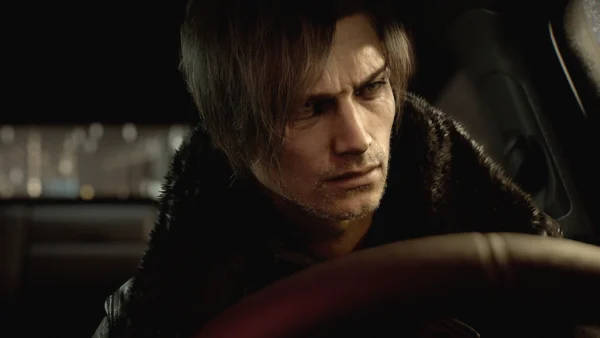

Leon Scott Kennedy: A Comprehensive Biography of Gaming’s Most Punctual Federal Agent
There exists, within the vast and deeply unsettling universe of Capcom’s Resident Evil franchise, a man who arrived late to his first day of work and consequently spent the next three decades fighting bioengineered monsters on behalf of the United States government. That man is Leon Scott Kennedy, and it would be entirely fair to describe his career trajectory as the most consequential case of tardiness in the history of modern American law enforcement. What began as a missed clock-in on September 29, 1998, became, through a series of events no reasonable human resources department could have anticipated, the defining arc of one of video gaming’s most enduring characters. The Guinness World Records Gamer’s Edition has acknowledged Leon among the most iconic video game characters in existence, a distinction he shares with plumbers, hedgehogs, and Italian-American archaeologists, which is genuinely good company.
Origins: A Rookie Cop, A Doomed City, and the World’s Worst Commute
Leon Scott Kennedy was introduced to the world in Capcom’s 1998 survival horror landmark Resident Evil 2, created under the direction of Hideki Kamiya and substantially rewritten by Noboru Sugimura. The character had, in the game’s earlier prototype, been conceived as a seasoned veteran officer, the sort of self-possessed individual who presumably arrives on time and does not wake up hungover in motels. Sugimura, however, found this version insufficiently compelling and reconceptualized Leon as a twenty-one-year-old rookie, someone, as Kamiya himself described it, with genuine weaknesses, a deliberate departure from the stoic archetypes that populated the franchise’s first installment. The result was a character who arrives in Raccoon City for the first time, on his first day, having already broken up with his girlfriend and overslept, only to discover that the entire municipal population has been transformed into flesh-consuming zombies by the Umbrella Corporation’s T-Virus. By any reasonable metric, this is a suboptimal orientation experience.
His backstory, established across various official materials, indicates that Leon is an Italian-American whose family had ties to organized crime and whose parents were killed when he was young. He survived owing to the intervention of a single police officer, an act that so profoundly affected him that he resolved to dedicate his life to that same profession. He graduated from the police academy, requested assignment to Raccoon City because of unsolved murders in the surrounding Arklay Mountains, and arrived to find the city simultaneously being turned into a biological catastrophe by a shadowy pharmaceutical giant. That this had not been disclosed at the time of application is, one assumes, an oversight HR will address eventually.
In Resident Evil 2, Leon navigates the overwhelmed Raccoon City Police Department, encounters the spy Ada Wong, uncovers Umbrella’s underground laboratory, and escapes alongside Claire Redfield and a young girl named Sherry Birkin, moments before the government orders a nuclear strike to contain the outbreak. He is twenty-one years old. It is his first day. He will not have another one quite like it, but he will come close on several subsequent occasions.
The Government Years: A Promotion Nobody Asked For
Following his escape from Raccoon City, Leon was not thanked, debriefed over refreshments, or offered counseling. Instead, he was, as official lore records it, forcefully recruited into a classified anti-Umbrella program under USSTRATCOM. The distinction between employment and conscription appears to have been entirely theoretical in his case. Over the following years he was trained in anti-bioweapon combat, becoming an elite agent operating directly under presidential authority, a job title that sounds considerably more glamorous than it is in practice, given that it primarily involves shooting genetically modified parasites in rural European locations.
His next major appearance came in Resident Evil 4 in 2005, set six years after Raccoon City, which placed him at approximately twenty-seven years old and considerably more competent, though no less inclined toward sardonic commentary in the face of existential threat. Assigned to rescue Ashley Graham, the President’s daughter, from an unnamed rural region of Spain, Leon discovers that the local population has been infected with a mind-controlling parasite called Las Plagas, controlled by a quasi-religious cult known as Los Illuminados. The game was universally acknowledged upon release to have revolutionized the third-person action genre, an achievement accomplished, somewhat distractingly, between one-liners. Game director Hideki Kamiya noted that he had fallen in love with Leon all over again upon seeing the character’s reinvention, which is the kind of testimony one does not typically encounter in the context of zombie sequels, but which was entirely deserved.
The Later Missions: Planes, Parasites, and Professional Burnout
Leon returned as one of several protagonists in Resident Evil 6 in 2012, by which point he was thirty-five years old, visibly fatigued, and partnered with agent Helena Harper in an investigation that begins, most memorably, with Leon being compelled to shoot the President of the United States, who has been zombified by bioterrorism. This is not, one gathers, an event that improves one’s standing with the executive branch. The game introduced a more haggard, emotionally complicated Leon, consistent with the narrative logic of a man who had survived Raccoon City, rural Spain, the Eastern Slav Republic, and an undisclosed number of additional bioweapon incidents without apparently managing to schedule a week of uninterrupted annual leave.
The animated films provided significant supplementary material. Resident Evil: Degeneration in 2008 reunited Leon with Claire Redfield inside an airport seized by a G-Virus outbreak. Resident Evil: Damnation in 2012 dispatched him to the Eastern Slav Republic under circumstances that were never quite adequately explained. Resident Evil: Vendetta in 2017 found him in a condition of alcoholism severe enough that Chris Redfield and Rebecca Chambers staged what amounted to a professional intervention, which is perhaps the most humanizing thing that has ever happened to him. The Netflix animated miniseries Resident Evil: Infinite Darkness in 2021 placed him within a political thriller framework that spoke to his ongoing institutional existence. The 2019 remake of Resident Evil 2 revisited his origins with photorealistic fidelity and considerable emotional depth, and the 2023 remake of Resident Evil 4 revived public enthusiasm for the character to a commercially significant degree.
His appearance in Resident Evil Requiem in 2026, as a fifty-one-year-old veteran co-protagonist alongside a new agent named Grace Ashcroft, represents his most recent outing. Director Koshi Nakanishi noted in production materials that the developers wanted the game to highlight Leon’s physical and mental state after decades of confronting creatures that most career paths do not involve. Nakanishi also acknowledged that making a traditional horror game around a protagonist as experienced as Leon presented a structural challenge, which is a polite way of saying that very little frightens a man who has been personally responsible for the death of a mutated United States President.
Beyond the Games: Leon as Cultural Artefact
Leon appears in the non-canonical Resident Evil Gaiden for Game Boy Color in 2001, in both the 1998 original and 2019 remake of Resident Evil 2, in Resident Evil: The Darkside Chronicles in 2009, in Resident Evil: Revelations 2, in the crossover title Project X Zone 2, and as a playable survivor in the asymmetric multiplayer game Dead by Daylight. His likeness has appeared on figurines, statues, dioramas, gun replicas, standees, keychains, watches, and, in what might be described as the most ambitious franchise extension of the modern era, perfumes. He was featured in themed attractions at Universal Studios Japan and Universal Orlando’s Halloween Horror Nights. He has also appeared as a Spirit in Super Smash Bros. Ultimate, which is the kind of cross-franchise acknowledgment that requires approximately thirty years of accumulated cultural capital to earn. The Empire magazine list of fifty greatest video game characters placed him at forty-fourth, which is either a modest ranking or a significant one depending on how many video game characters one believes exist.
The Voices Behind the Catastrophe: A Survey of the Performers Who Made Leon Worth Hearing
One of the more administratively complex aspects of Leon S. Kennedy’s existence is that, across nearly three decades and multiple platforms, he has been voiced by a remarkable number of different actors across English and Japanese productions, each of whom brought something distinct to the performance of a man perpetually surrounded by the recently deceased.
Paul Haddad (English, 1998)
The original voice of Leon in the English version of Resident Evil 2, Paul Haddad was born in Birmingham, England on May 20, 1963. He attended McGill University and graduated from the National Theatre School of Canada in 1988, subsequently performing for two years at the Stratford Festival in Ontario before building a career in voice acting that included roles in X-Men: The Animated Series, where he voiced Quicksilver, and various Canadian animated productions. He reportedly modelled his approach to Leon on Harrison Ford and Michael J. Fox, which explains a great deal about the character’s peculiar mixture of resigned competence and accidental charisma. His portrayal made him, in the words of gaming industry observers, an icon among the game’s fanbase, which is a significant designation for a performance recorded during the era when survival horror voice direction was, by modern standards, enthusiastically unpolished. He was later recruited to voice a character in the spiritual successor game Daymare: 1998 specifically because of his legacy in the role. Haddad passed away on April 11, 2020, in Toronto, at the age of fifty-six, following a period of illness that included throat cancer and multiple neurosurgeries. His contribution to the character’s identity is foundational in the most literal possible sense.
Paul Mercier (English, 2005–2009)
Paul Mercier, born July 13, 1962, is an American voice actor whose introduction to Leon came via Resident Evil 4 in 2005. Mercier had studied at Adelphi University and trained for three years with the Royal Shakespeare Company at the Guildhall School of Music and Drama before building a career that eventually produced one of the most celebrated portrayals of the character. He brought an authority and dry wit to the now-experienced federal agent version of Leon that proved extremely well-suited to that game’s tonal register, which blended genuine horror with one-liner delivery in proportions that should not have worked as well as they did. He also voiced the Merchant in the same game, a beloved figure with a very specific commercial proposition. Mercier reprised the Leon role in Resident Evil: Degeneration in 2008 and Resident Evil: The Darkside Chronicles in 2009. His wider credits include Specter in the SOCOM U.S. Navy SEALs series, Faramir in The Lord of the Rings: The Battle for Middle-earth, and Jacques Blanc in Onimusha 3: Demon Siege. His work defined the character’s sonic identity during what many consider the most culturally significant period of the franchise, and he accomplished this feat while simultaneously voicing a man who sold illegal firearms from a suitcase in a barn, a dual achievement of modest but genuine interest.
Christian Lanz (English, 2012)
Christian Lanz, born May 1, 1977 in Mexico City, is a Mexican-American voice actor who provided the voice of Leon in Resident Evil: Operation Raccoon City in 2012. He had been invited to continue the role in Resident Evil 6 but declined due to scheduling conflicts, including his concurrent work on Teenage Mutant Ninja Turtles, where he voiced Xever, also known as Fishface. His career also includes the recurring role of Chancellor Esteban in Elena of Avalor and service as the announcer of the Daytime Emmy Awards since 2015. His single-entry stint as Leon occupies a specific niche within the character’s vocal history, situated in a spin-off of disputed canonical standing, which is either unfortunate or simply the nature of a franchise that has always generated considerably more media than any single timeline can comfortably contain.
Matthew Mercer (English, 2012–2023)
Matthew Mercer, born Matthew Christopher Miller on June 29, 1982 in Palm Beach Gardens, Florida, is among the most prominent voice actors working in the American entertainment industry, and his tenure as Leon across multiple projects represents the most extended single-actor English-language contribution to the character’s mature period. He voiced Leon in Resident Evil: Damnation in 2012, in Resident Evil 6 in 2012, in Resident Evil: Vendetta in 2017, and returned for Resident Evil: Death Island in 2023. His wider career, which is genuinely exhausting to abbreviate with any fairness, includes Levi Ackerman in Attack on Titan, Cole Cassidy in Overwatch, Jotaro Kujo in JoJo’s Bizarre Adventure, Chrom in Fire Emblem: Awakening, Jack Cooper in Titanfall 2, Yusuke Kitagawa in Persona 5, Goro Majima in Like a Dragon, Ganondorf in The Legend of Zelda: Tears of the Kingdom, and Vincent Valentine in Final Fantasy VII Rebirth. He was named Voice Actor of the Year at the 2017 BTVA People’s Choice Voice Acting Awards. Since 2015 he has served as the Dungeon Master and chief creative officer of Critical Role, the Dungeons and Dragons streaming production that has become a genuinely significant independent media enterprise. Academics studying the second campaign noted that he introduced 1,144 unique NPC characters across its run, which, placed beside his extensive Leon work, suggests a professional relationship with volume of output that most performers would find alarming. He also once auditioned to voice-match a live-action actor playing Leon in a film, served as the reference recording for that very audition, and did not get the part. He has stated that he still finds this funny, which is broadly consistent with Leon’s own philosophy of continuing in the face of unreasonable setbacks.
Nick Apostolides (English, 2019–present)
Nicholas Apostolides, born March 1, 1984 in Boston, Massachusetts, of Greek and Italian descent, is the current English-language voice of Leon, originating the role for the 2019 remake of Resident Evil 2 and continuing through Resident Evil: Infinite Darkness, the 2023 remake of Resident Evil 4, and Resident Evil Requiem in 2026. He won IGN’s Horror Fest Award for Best Actor in a Horror Game for his performance in the Resident Evil 2 remake. His career path included several years in real estate in Boston before he relocated to Los Angeles to pursue performance, a transition that has the distinction of being entirely unexpected and completely explicable only in retrospect. His commercial credits number over one hundred. He received a New England Chapter Emmy nomination for hosting the history series American Ruins. Additional gaming credits include roles in Dead Space, Apex Legends, and Life Is Strange 2. He has spoken publicly about being a lifelong Resident Evil fan who was specifically inspired by Paul Mercier’s performance in Resident Evil 4 to pursue the industry, and who later worked with Mercier directly while preparing for his own interpretation of the same character. He provided both voice and full motion capture for the role, a dual contribution that gives his performance an unusual physical completeness. His vocal range, running from high baritone to low alto, lends Leon a quality of controlled intensity with an underlying fragility that suits the character’s increasingly burdened psychological trajectory with considerable precision.
Riley McShane (English, 2021)
Riley McShane, the vocalist of the American metal band Allegaeon, provided Leon’s voice for the Resident Evil chapter of the asymmetric survival game Dead by Daylight, which was announced by Metal Blade Records and represents the most genre-traversing casting decision in the character’s vocal history. A self-described lifelong Resident Evil fan, McShane delivered what the Dead by Daylight community has come to regard with some affection as a memorably distinctive interpretation, particularly in the area of pain vocalizations, which McShane himself has acknowledged publicly with apparent good humor. The convergence of death metal vocal technique and survival horror performance work proved, against all reasonable probability, to be a natural alignment of skill sets.
Takeshi Maeda (Japanese, Drama Album)
Takeshi Maeda, a Japanese voice actor and graduate of Nihon University’s College of Art, voiced Leon in the flashback sequences of the BIOHAZARD 2 Drama Album: The Female Spy Ada Lives, a supplementary audio production released in Japan. His contribution occupies a narrow but specific niche within the franchise’s considerable Japan-exclusive media catalogue, representing the earliest known Japanese vocal performance associated specifically with Leon’s personal history as told through non-game dramatizations.
Jin Yamanoi (Japanese, 2008)
Jin Yamanoi, born November 16, 1962, is a Japanese voice actor who provided Leon’s voice in the Japanese version of Resident Evil: Degeneration in 2008, the franchise’s first major CGI animated feature film. He also dubbed Luther West in a television broadcast version of Resident Evil: Retribution on TV Asahi’s Sunday Movie Theater programming. His performance in Degeneration represented the first feature-length Japanese vocal interpretation of the adult Leon, a character who had not previously received a full Japanese voice track in the mainline games due to Capcom’s early preference for English-only dubbing. The sonic responsibility this placed upon him, for Japanese audiences encountering a fully-voiced version of the character for the first time, was considerable.
Atsushi Miyauchi (Japanese, Theatrical Dub)
Atsushi Miyauchi, born July 8, 1969, is a Japanese voice actor who provided Leon’s voice for the theatrical release version of Resident Evil: Retribution in Japan, a separate dubbing effort from the television broadcast version. His credits across Japanese animation and production span several decades, and his appearance in this specific context reflects the sometimes labyrinthine conventions of Japanese theatrical distribution, in which different broadcast and theatrical versions of the same film could be assigned entirely different voice casts, a practice that has given Leon’s vocal history a certain quiet geographic complexity.
Toshiyuki Morikawa (Japanese, 2012–present)
Toshiyuki Morikawa, born January 26, 1967, is the established Japanese voice of Leon for the contemporary era, having held the role continuously from Resident Evil: Operation Raccoon City in 2012 through to Resident Evil Requiem in 2026. His credits for the character span Biohazard 6, Biohazard: Damnation, Project X Zone 2, BIOHAZARD RE:2, BIOHAZARD: Infinite Darkness, BIOHAZARD RE:4, Resident Evil: Vendetta, and Resident Evil: Death Island. He is also the founder of the voice acting company Axlone. His wider career includes Sephiroth in the Final Fantasy VII franchise, Minato Namikaze in Naruto, Dante in Devil May Cry, and Naraku in InuYasha. According to Anime News Network, he has recorded the second highest number of anime roles of any working voice actor. His particular facility with characters who project cool authority while concealing considerable damage beneath it makes him exceptionally well-matched to the older Leon, and Capcom’s consistent casting of Morikawa across the character’s most significant modern Japanese appearances has given that market a coherent sonic identity that English audiences, with their rather more changeable roster, may reasonably envy.
Yūki Kaji (Japanese, 2022)
Yūki Kaji, born September 3, 1985, is a prominent Japanese voice actor internationally recognized for voicing Eren Jaeger in Attack on Titan, Shoto Todoroki in My Hero Academia, Koichi Hirose in JoJo’s Bizarre Adventure, and Sabito in Demon Slayer. He provided the Japanese dubbing voice for Leon in the live-action film Resident Evil: Welcome to Raccoon City in 2022. Kaji’s range, which encompasses youthful idealism and explosive determination with considerable facility, made him a plausible match for the character’s younger iteration, and his commercial profile within the Japanese animation industry ensured the production received a Japanese vocal performance of significant recognizability. His one-time association with the role stands as the most star-studded single-appearance casting in the character’s Japanese vocal history, and probably the one that required the least explanation to a Japanese audience unfamiliar with the franchise.
A Final Accounting
What remains genuinely striking about Leon Scott Kennedy, viewed across the full span of his documented existence from the corridors of a zombie-infested police station to whatever fresh institutional catastrophe Resident Evil Requiem has arranged for him at age fifty-one, is that he has stayed legible, compelling, and oddly sympathetic across nearly three decades of franchise evolution, multiple genre reinventions, twelve distinct voice actors across two languages, and a body count that would require a dedicated administrative office to properly catalogue. He was designed by Noboru Sugimura to have weaknesses, and those weaknesses, his tardiness, his loyalty to people who exploit it, his inability to fully release a complicated woman who has spent thirty years being on the wrong side, his increasing difficulty persuading himself that the work is worth continuing, have made him more interesting with each passing iteration rather than less. The full roster of actors who have given him voice, from a British-Canadian theatre graduate in 1998 to a Boston-born former realtor in the present day, constitutes one of the more improbable and quietly moving ensemble achievements in gaming history. They were given a man perpetually arriving late to disasters of global consequence, and they made him, collectively and one at a time, someone worth following into every single one. Paul Mercier’s IMDb profile offers one useful window into the mid-period of this collective project, a moment when the character, and the performances behind him, first became something that could reasonably be described as definitive.
Now Read The VO Dirt!Voice Actors D.C. Douglas Knows and Loves!


OR CHECK OUT THE LATEST BLOG DROPPING:D.C. Douglas Joins Disney+’s Vampirina Season 2 as Speaker of Books
Film & Television work. 🎙️HEAR MY VOICE:
Voice Over work. 🎪CONVENTIONS:
Book me for your con! 🩶THE DC STORE:
Learn about Cameos!
I'm such a whore. 🎪LIVE IN PERSON:
Public nuisance posts. 🗣️INTERVIEWS:
Posts from my butt. 🍷GREEN ROOM:
BTS & L.A. life. 🧪RESIDENT EVIL WORLD:
Wesker fetish? 💫TALENT SPOTLIGHT:
Stalker crib notes.