
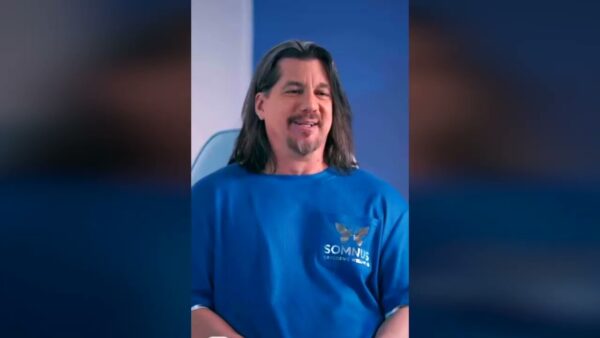
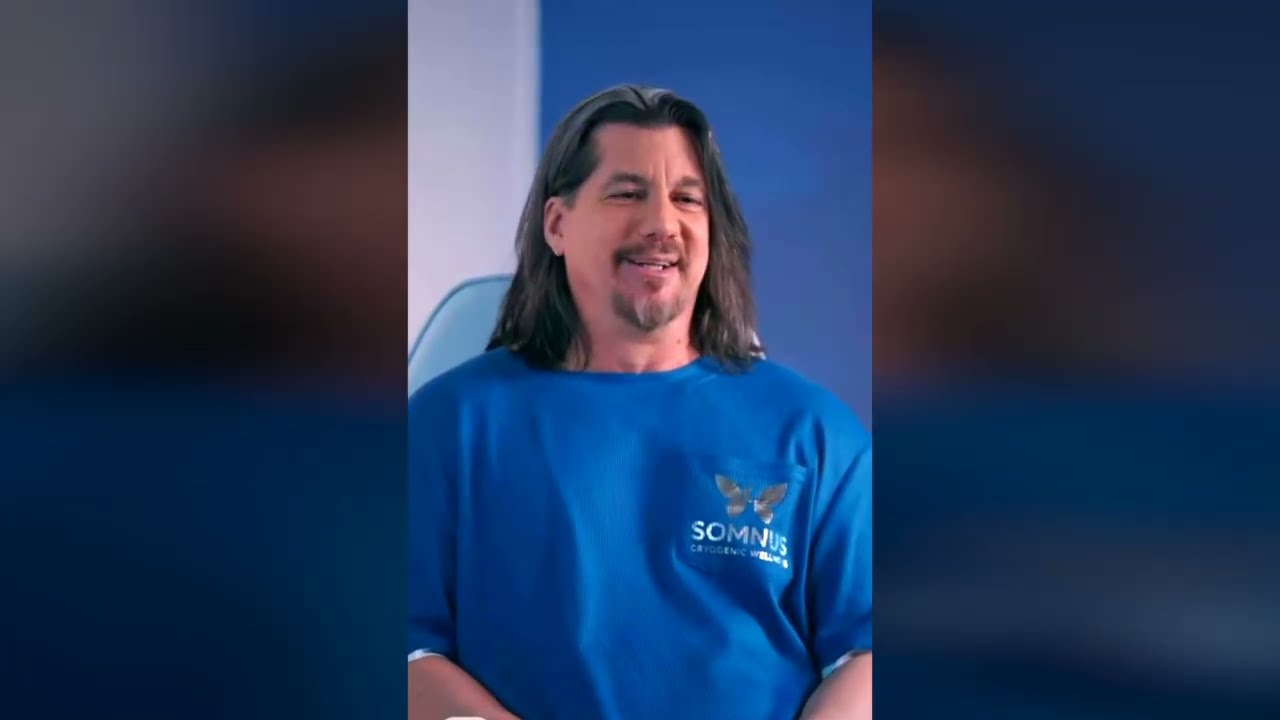
Cryo Seduction (2025)
The Vertical Gold Rush: Why D.C. Douglas is Freezing Himself for Art
If you’ve recently found yourself holding your phone upright for an extended period, staring not at a text from your mum but at a billionaire werewolf explaining his custody agreement, you are likely a victim of the “vertical drama” phenomenon. It is a world where landscape is forbidden, 16:9 is a heresy, and the drama is as tall as it is unhinged.
While the rest of Hollywood wrings its hands over box office returns and the existential dread of AI, a new industry has quietly set up shop in the backlots of Los Angeles. It is fast, it is furious, and it is filmed entirely in portrait mode. At the forefront of this revolution—or perhaps mutation—is a show titled Cryo Seduction, a title that manages to promise both hard science and soft romance in two words. And standing tall (vertically, of course) within it is none other than the indefatigable D.C. Douglas.
The Plot: A Chilly Reception
To understand the allure of Cryo Seduction, one must first abandon the antiquated notion of “pacing.” In the vertical world, there is no time for establishing shots of a rainy London street. We cut straight to the chase, or in this case, the deep freeze.
The story reportedly revolves around the Somnus-James pharmaceutical dynasty, a family whose ambition is matched only by their disregard for medical ethics. The premise is delightfully bonkers: a young woman, Rose, volunteers for a groundbreaking cryogenic experiment. Why? For love, obviously. In the vertical universe, people rarely freeze themselves for tax purposes. She hopes to save the family company and, presumably, win the heart of the dashing Elliot James.
But because this is a drama designed to be consumed in 60-second bursts while waiting for a latte, things go immediately pear-shaped. Rose doesn’t just wake up; she wakes up to a world of corporate intrigue, betrayal, and a very complicated merger. The “seduction” part of the title hints that the thawing process involves more than just warm blankets. It is Succession meets Futurama, played at 1.5x speed.
Keith: The Man, The Myth, The Mogul
Highlighting this frosty melodrama is D.C. Douglas, an actor whose voice could likely persuade a stone to sign a non-disclosure agreement. Douglas plays Keith. Just Keith. In the credits of these micro-series, surnames are often a luxury, but let us assume Keith is the puppet master of the Somnus-James empire.
For fans of Douglas’s work—most notably as the sunglasses-wearing bioweapon enthusiast Albert Wesker in Resident Evil—his turn in Cryo Seduction is a delicious return to form. Keith is the sort of character who drinks scotch at 10 a.m. and discusses human experimentation as if it were a golf handicap.
Douglas brings a necessary gravitas to the vertical frame. Acting in portrait mode presents unique challenges; you cannot wander off-screen to look pensive, or you simply disappear. You must hold the center. Douglas, with his theatre training and voice-over precision, anchors the absurdity. When Keith declares that the “fate of the company” rests on a frozen girl, you believe him, even if you are watching it on a screen the size of a playing card. He is the villain the format deserves: sharp, concise, and looming large in a narrow aspect ratio.
The State of Vertical Production: A Tilted Hollywod
While Cryo Seduction might sound like a fever dream, it is actually a prime specimen of a booming industrial complex. Los Angeles is currently hosting a “Gold Rush” of vertical production that would make the 1849 prospectors blush.
According to verified reports from high-authority trade journals, the volume of these productions is staggering. Estimates suggest there are between 30 to 40 vertical shorts filming in Los Angeles every single month. This is not a cottage industry; it is a skyscraper industry, quite literally.
The studios behind these apps—giants like Crazy Maple Studio (the creators of ReelShort) and DramaBox—are pumping millions into the local economy. They are hiring crews, renting locations, and employing actors who might otherwise be waiting for the next marvel of the Marvel Universe to begin filming.
The Economics of the Swipe
The business model is ingenious. Episodes are one to two minutes long. The first few are free, designed to hook you like a digital fisherman. Then, just as Rose is about to be frozen, the paywall drops. To see her thaw, you must pay. It is the dime novel of the 21st century, updated for the dopamine loops of the smartphone generation.
Production budgets are lean but not nonexistent. A typical series might cost anywhere from $100,000 to $300,000—a rounding error for Netflix, but a fortune for an indie filmmaker. This cash injection has created a weirdly vibrant ecosystem in LA. You have AFI graduates directing werewolf romances and veteran actors like D.C. Douglas lending their credibility to scripts that move faster than a cheetah on espresso.
The “Wild West” of the West Coast
It is, however, a bit of a Wild West. Union rules are often navigated with creative flexibility. The shoots are grueling, often knocking out 60 episodes in a week. It is a volume business, prioritizing quantity and hooks over nuance. But for the actors, it is work. It is a chance to play, to experiment, and to be seen by millions of global viewers who are voraciously consuming content on the subway, in the bathroom, and under the dinner table.
How vertical dramas are reshaping Hollywood’s job market is a question on everyone’s lips, from the crafty services table to the executive suites. The answer seems to be: rapidly, and with very little headroom.
Why We Watch
Why does a show like Cryo Seduction work? Why do we care about Keith and his frozen assets? Perhaps it is because, in a world of sprawling, ten-hour epics that demand our weekends, the vertical drama asks for nothing but a minute. It is low-stakes commitment with high-stakes emotion. It is absurd, yes, but it knows it. It winks at you. It says, “I know you’re watching this on the bus, so here is a slap, a kiss, and a cryo-chamber in sixty seconds. You’re welcome.”
As D.C. Douglas chews the scenery (what little scenery fits in the frame), we are reminded that acting is acting, regardless of the aspect ratio. Whether he is destroying a zombie apocalypse or managing a pharmaceutical merger in a 9:16 window, the performance remains.
So, here is to the vertical revolution. It may look narrow, but the possibilities are surprisingly wide. And if you do find yourself freezing your loved ones for corporate gain, do try to make sure D.C. Douglas is managing the paperwork. At least you know it will be done with style.